
Mortise vs Cylindrical Locks
Choosing the right door lock is not only about opening and closing a door. In a well-designed building, the lock affects security, daily comfort, door performance, maintenance needs, and even the visual character of the space. This is why the comparison of mortise vs cylindrical locks matters for architects, contractors, project developers, and property owners who want to make a practical but long-lasting decision.
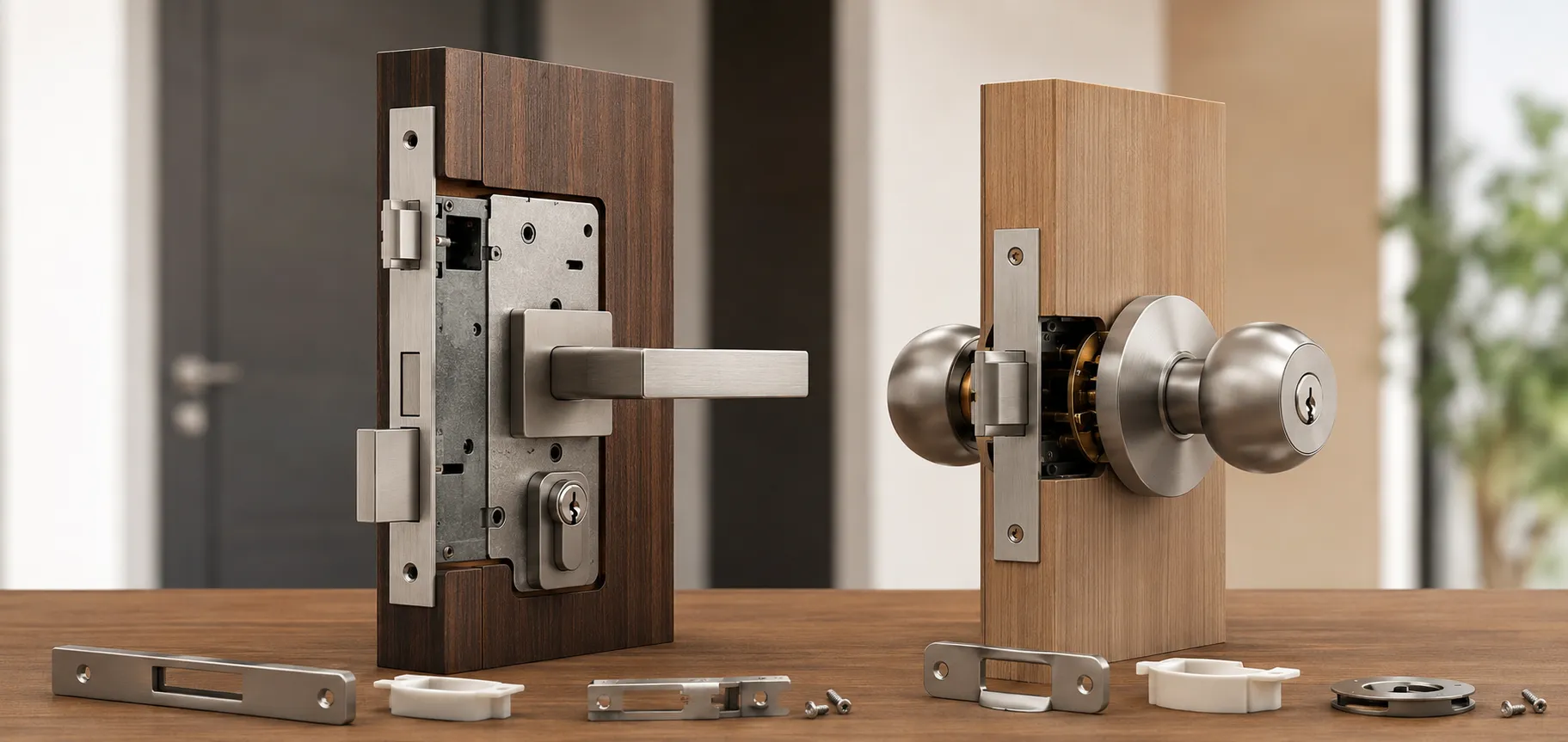
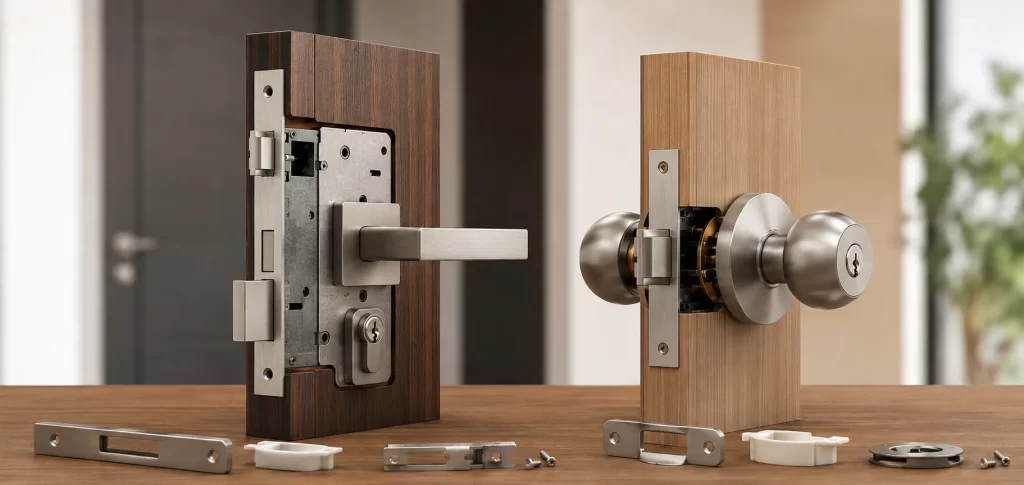
At first glance, both lock types may look similar from the outside. You see a handle, a key cylinder, and a latch. But inside the door, their structures are quite different. A mortise lock is generally more complex and heavy-duty, while a cylindrical lock is usually simpler, quicker to install, and more practical for standard interior applications.
So, which one is better? Honestly, there is no single answer for every project. A hotel entrance door, a villa exterior door, an office partition, and a residential bedroom door do not have the same security or durability expectations. The best choice depends on the door type, usage frequency, budget, design expectations, and the level of protection you need.
What Are Mortise Locks?
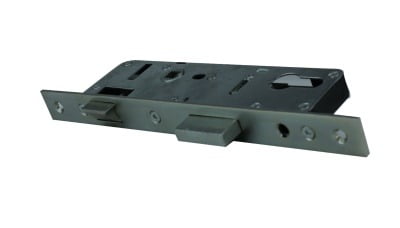
A mortise lock is a lock system installed into a specially prepared pocket, or mortise, inside the edge of the door. Instead of sitting mostly on the surface, the main lock body is recessed into the door structure. This gives the lock a more integrated, solid, and professional construction.
Mortise locks are often preferred in projects where door security, long-term durability, and premium hardware quality are important. Because the lock body is larger and more robust than many basic locksets, it can support multiple locking functions within a single unit, such as latch operation, deadbolt locking, and handle control.
In many architectural projects, especially where PVC or aluminum door systems are used, mortise locks offer a strong balance between functionality and design. For projects that require durable and functional locking solutions, TGP Systems offers reliable mortise lock PVC systems designed to support long-term door performance.
How Mortise Locks Work
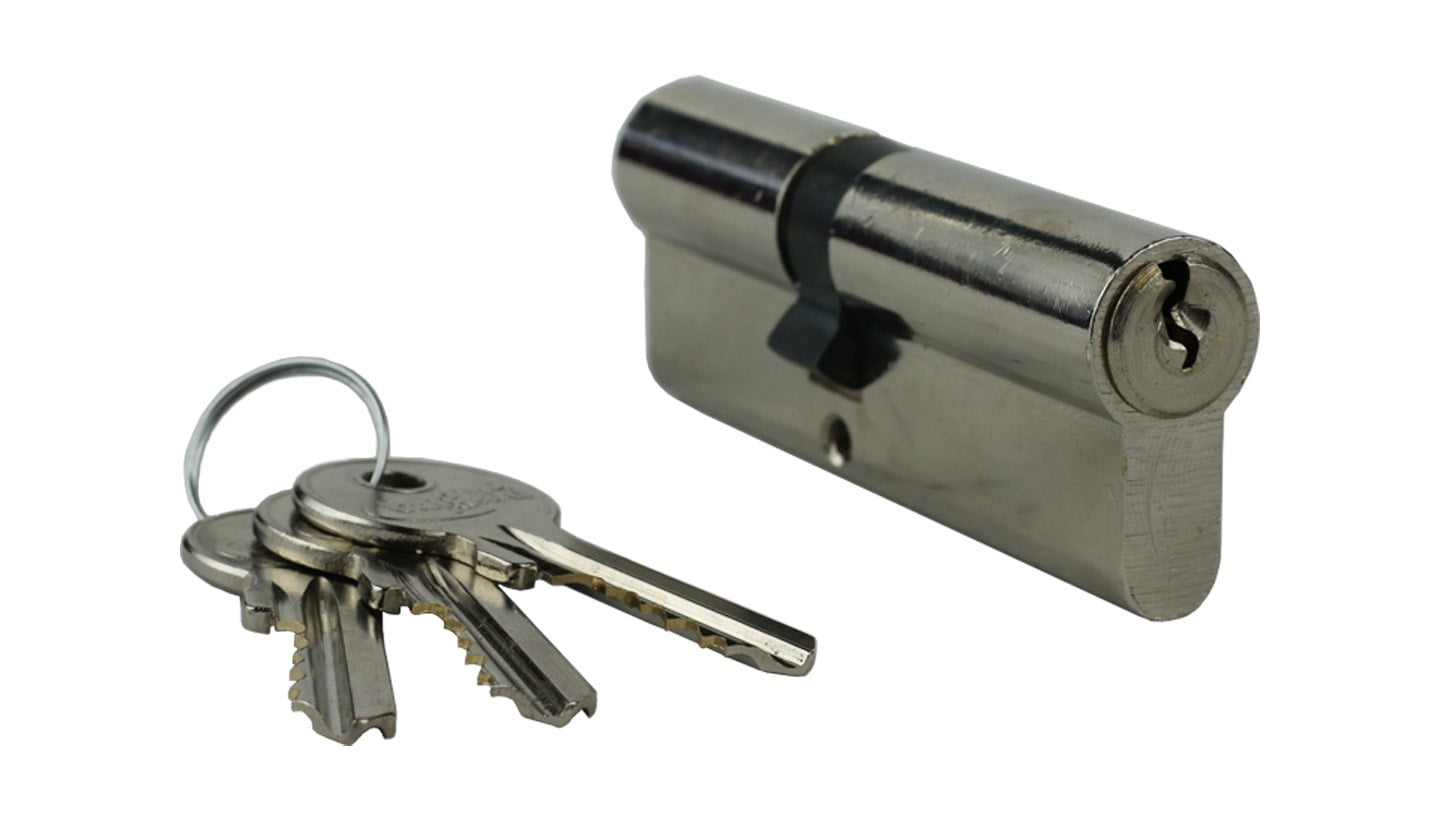
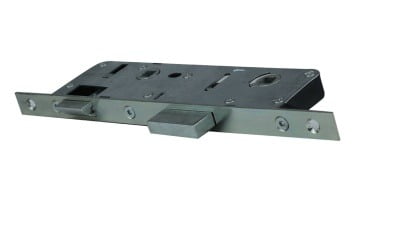
A mortise lock works through a lock body placed inside the door. This body usually includes a latch mechanism, a deadbolt, a cylinder, and internal components that connect the handle or lever to the locking system.
When the handle is pressed, the latch retracts and allows the door to open. When the key or thumb turn is used, the deadbolt extends into the strike plate on the door frame. This layered mechanism is one reason mortise locks are often associated with better strength and controlled operation.
Of course, not every mortise lock has the same quality. The material, engineering, cylinder type, installation precision, and compatibility with the door system all affect real performance. A strong lock installed poorly may still create problems over time.
Where Mortise Locks Are Commonly Used
Mortise locks are commonly used in commercial buildings, hotels, villas, entrance doors, exterior doors, and high-traffic areas. They are especially suitable for doors that need to handle frequent use without losing their smooth operation.
You will often see mortise lock systems in premium residential projects, office buildings, hospitality spaces, and architectural door applications where security and appearance must work together. In our view, this is where mortise locks show their real value: they do not only lock the door; they support the overall quality feeling of the entrance.
What Are Cylindrical Locks?
A cylindrical lock is a lock type installed through round holes drilled into the door. Compared to mortise locks, its structure is generally simpler and easier to fit. The main locking mechanism is housed inside a cylindrical body, which connects to the knob or lever on both sides of the door.
Cylindrical locks are widely used because they are practical, affordable, and suitable for many standard door applications. They are especially common in residential interiors, office partitions, storage rooms, and spaces where the security requirement is moderate rather than heavy-duty.
This does not mean cylindrical locks are weak by default. A good-quality cylindrical lock can perform very well in the right setting. The key point is matching the lock system to the actual use case rather than choosing based only on price or appearance.
How Cylindrical Locks Work
Cylindrical locks usually include a latch, knob or lever set, key cylinder, spindle, and strike plate. The latch extends from the door edge into the frame, keeping the door closed. When the handle is turned, the latch retracts and the door opens.
In keyed versions, the cylinder controls whether the handle can operate the latch. Some models are designed for privacy, some for passage, and others for basic security. Because the mechanism is less complex than a mortise lock, installation is usually faster.
Where Cylindrical Locks Are Commonly Used
Cylindrical locks are commonly used on interior doors, residential rooms, office interior doors, meeting rooms, staff areas, and light commercial applications. They are a practical solution when fast installation and easy replacement are priorities.
For example, if a project has many interior doors and the main requirement is daily usability rather than high-level security, cylindrical locks may make more sense. They can reduce installation time and offer a clean, simple appearance.
Mortise Lock vs Cylindrical Lock: Main Differences
The main difference between a mortise lock and a cylindrical lock is the structure of the locking mechanism and the way it is installed into the door. Mortise locks require a rectangular pocket inside the door, while cylindrical locks are installed through circular holes.
This difference affects nearly everything else: security level, durability, installation process, cost, repair needs, and design flexibility. To make the comparison clearer, let’s look at the key criteria side by side.
| Criteria | Mortise Lock | Cylindrical Lock |
|---|---|---|
| Security | More suitable for stronger and security-focused projects | Can be sufficient for moderate security needs |
| Installation | Requires more professional and detailed installation | Faster and easier to install |
| Durability | Better suited for heavy and frequent use | Practical for standard daily use |
| Best Use | Exterior doors, commercial areas, premium projects | Interior doors, office partitions, residential indoor areas |
| Cost | Generally higher in product and installation cost | Usually more economical |
| Design Flexibility | Works well with premium architectural hardware | Offers simple and practical design solutions |
Security Level
Mortise locks are generally considered stronger because of their larger lock body and multi-component mechanism. The deadbolt and latch are integrated into a more solid structure, which can offer better resistance when combined with a strong door frame and high-quality strike plate.
Cylindrical locks can still provide acceptable security in many situations. However, for exterior doors, commercial entrances, and high-value areas, mortise locks are often the more confidence-building choice. Security is not only about the lock itself; it is also about the complete door system.
Installation Process
Mortise lock installation requires more precision. The door must be prepared with a correctly sized pocket for the lock body. If the cut is not accurate, the lock may not sit properly, and this can affect both appearance and performance.
Cylindrical locks are usually easier to install because they require standard round holes. This makes them practical for projects where speed, simplicity, and cost efficiency matter. For large interior door packages, this can be a real advantage.
Durability and Long-Term Use
In high-traffic areas, mortise locks often perform better over the long term. Their internal structure is designed to handle repeated operation, which makes them suitable for hotels, offices, commercial buildings, and frequently used entrance doors.
Cylindrical locks, on the other hand, are practical for spaces where usage is lighter or moderate. A residential bedroom door, a small office room, or an interior storage area may not need the same heavy-duty locking system as a main entrance.
Design and Appearance
Door hardware has a stronger visual impact than many people expect. A handle set, cylinder, lock body, and visible hardware details can either support the architectural style or feel disconnected from it.
Mortise locks often pair well with premium handle sets and more refined door designs. Cylindrical locks are usually simpler, but that simplicity can be an advantage in minimal interiors or practical office layouts. The right choice should feel natural with the door material, frame design, and overall interior language.
Which Lock Type Is Better for Your Project?
The better lock type depends on what the project actually needs. If security, durability, and premium performance are the main priorities, a mortise lock is often the stronger option. If easy installation, budget control, and simple daily use are more important, a cylindrical lock may be enough.
We would not recommend choosing a lock only because it is popular. A lock system should be selected according to the door’s function. Is it an exterior door? Will hundreds of people use it every day? Does the project require a premium finish? Will maintenance access be easy later? These questions matter.
Choose Mortise Locks If…
You should consider mortise locks if the door is used frequently, exposed to higher security expectations, or part of a commercial or premium residential project. They are especially suitable for entrance doors, hotel doors, villa doors, and heavy-duty architectural applications.
Mortise locks also make sense when the door design requires a more professional-grade hardware solution. If the aim is long-term value rather than only low initial cost, mortise systems can be a more balanced investment.
Choose Cylindrical Locks If…
You may prefer cylindrical locks if the door is used in an interior space, the security requirement is moderate, and the project needs faster installation. They are also useful when many doors must be equipped efficiently without overcomplicating the hardware package.
For office partitions, residential room doors, and standard indoor areas, cylindrical locks can offer enough function without unnecessary cost. In short, they are practical where practicality is exactly what the project needs.
Why Door Hardware Quality Matters
A lock is a small component compared to the whole building, but it is used every day. People touch it, hear it, feel it, and judge the door by how smoothly it operates. A poor-quality lock can make even a well-designed door feel unreliable.
Good door hardware supports security, comfort, durability, and maintenance control. The lock body, latch mechanism, cylinder, handle set, and strike plate must work together as a system. If one part is weak, the whole experience is affected.
When choosing complete door and window accessories, professional-grade hardware for windows and doors PVC systems can make a significant difference in usability, security, and design consistency.
TGP Systems Approach to Reliable Lock and Door Hardware Solutions
TGP Systems evaluates window, door, and architectural system components not only by appearance but also by long-term performance. This approach is important because reliable hardware should continue to function smoothly after the installation is completed and the project is actively used.
For us, quality hardware is not just a technical detail. It directly affects how secure, comfortable, and complete a building feels. A lock that works quietly, closes properly, and matches the door system gives users confidence without drawing unnecessary attention to itself.
TGP Systems focuses on durable materials, project-oriented solutions, reliable supply, and a balanced price-performance approach. Whether the project requires PVC door hardware, aluminum door components, mortise lock solutions, or complete accessory planning, choosing compatible parts can reduce problems and improve long-term value.
Final Thoughts: Mortise or Cylindrical Lock?
Mortise and cylindrical locks both have their place. Mortise locks are generally stronger, more durable, and more suitable for security-focused or high-traffic projects. Cylindrical locks are easier to install, more economical, and practical for many interior doors.
The smartest decision is not always the most expensive one. It is the one that fits the door type, usage frequency, security expectation, budget, and design goal. If your project needs a durable and professional-grade solution, evaluating the lock as part of the complete door hardware system will give better results.
Choosing between mortise and cylindrical locks depends on your project’s security needs, door type, design expectations, and long-term usage requirements. If you are planning a residential, commercial, or architectural project, TGP Systems can help you select durable, functional, and visually compatible door hardware solutions. Explore TGP Systems’ product categories or contact the team to find the right lock and hardware components for your project.
Frequently Asked Questions About Mortise vs Cylindrical Locks
1. What is a mortise lock?
A mortise lock is a lock system installed inside a specially cut pocket in the edge of the door. It usually includes a lock body, latch, deadbolt, cylinder, and handle mechanism.
2. What is a cylindrical lock?
A cylindrical lock is a lock type installed through round holes drilled into the door. It is commonly used for interior doors, office rooms, and standard residential applications.
3. What is the main difference between mortise and cylindrical locks?
The main difference is their structure and installation method. Mortise locks have a larger lock body placed inside the door, while cylindrical locks use a simpler cylindrical mechanism fitted through round holes.
4. Which lock is more secure?
Mortise locks are generally considered more secure because they have a stronger internal body and often include both latch and deadbolt functions. However, the total security level also depends on the door, frame, cylinder, and installation quality.
5. Are cylindrical locks good for exterior doors?
Cylindrical locks can be used on some exterior doors, but they are usually better suited for moderate security needs. For high-security entrance doors, mortise locks are often the preferred option.
6. Which lock type is easier to install?
Cylindrical locks are easier and faster to install because they require standard round holes. Mortise locks need more precise door preparation and professional installation.
7. Which lock lasts longer?
In heavy-use areas, mortise locks often offer better long-term durability. Cylindrical locks can also last well when used in suitable interior or moderate-traffic areas.
8. Are mortise locks more expensive?
Yes, mortise locks are generally more expensive than cylindrical locks because their mechanism is more complex and installation requires more precision. Still, they may offer better long-term value in demanding projects.
9. Which lock is better for commercial buildings?
Mortise locks are often better for commercial buildings, hotels, offices, and high-traffic areas because they provide stronger durability and a more professional hardware solution.
10. Which lock is better for residential interior doors?
Cylindrical locks are usually practical for residential interior doors such as bedrooms, bathrooms, and home office rooms. They are simple, functional, and cost-effective for everyday use.
11. Can door hardware affect the design quality of a project?
Yes. Door hardware affects both appearance and user experience. A well-matched lock, handle, and cylinder can make the door feel more secure, comfortable, and visually consistent with the project.
12. How should I choose between mortise and cylindrical locks?
Start by considering the door type, security requirement, usage frequency, budget, installation conditions, and desired design style. For high-traffic and security-focused areas, mortise locks are often better. For simple interior applications, cylindrical locks may be enough.
If this comparison helped you clarify your decision, share it with your project team or contact TGP Systems to discuss the most suitable door hardware solution for your next project.
Please click to see TGP brand mortise lock options.
You can get help from our Whatsapp Support Line for your questions.







Leave a Reply
You must be logged in to post a comment.