
Tinted Glass in Modern Architecture: Uses and Benefits
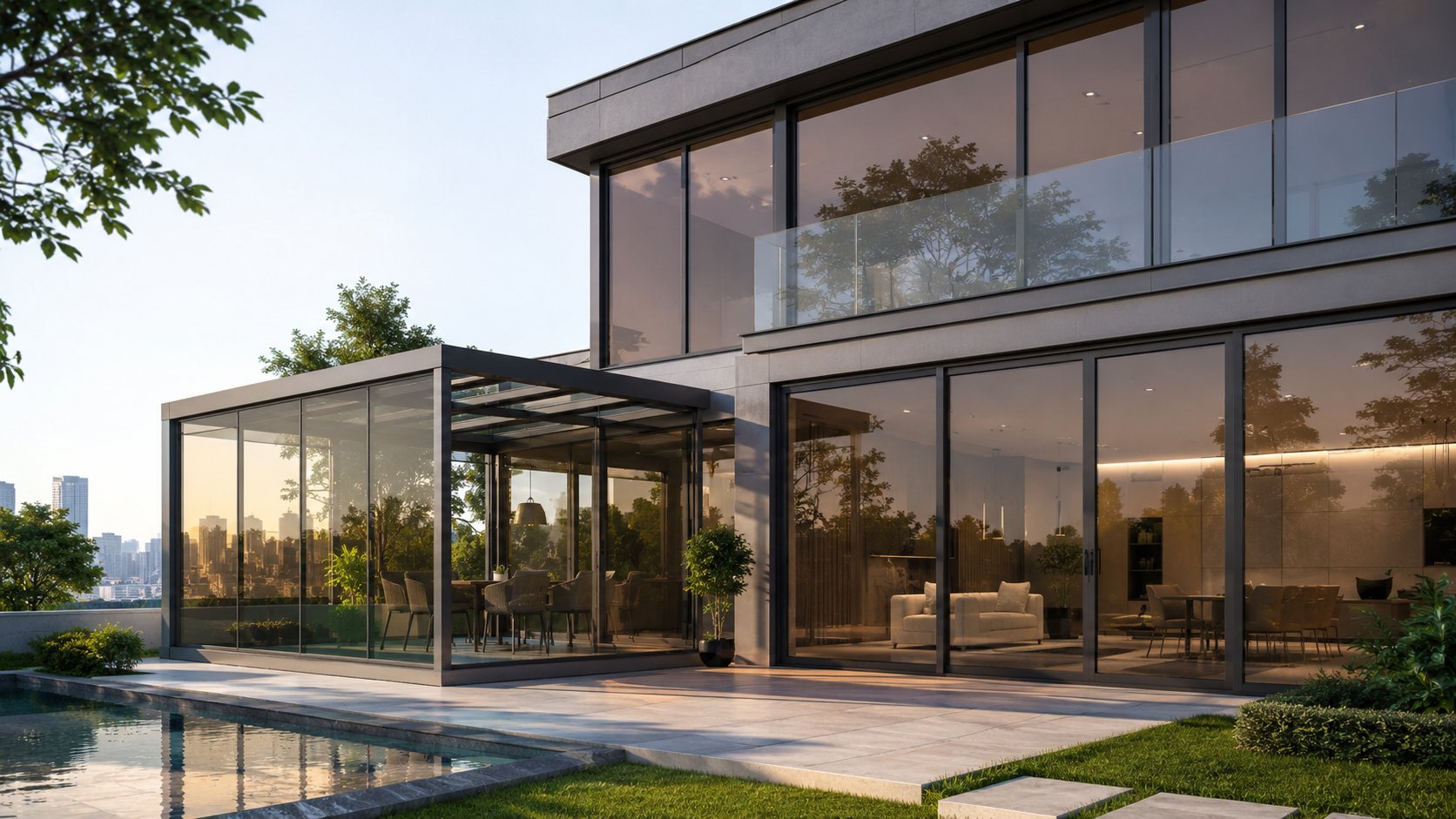
Tinted glass in modern architecture does far more than add color to a building. When specified correctly, it can soften intense daylight, reduce glare, support daytime privacy and give a façade a distinctive visual identity. These qualities make it attractive for offices, homes, hotels, restaurants and large commercial developments.
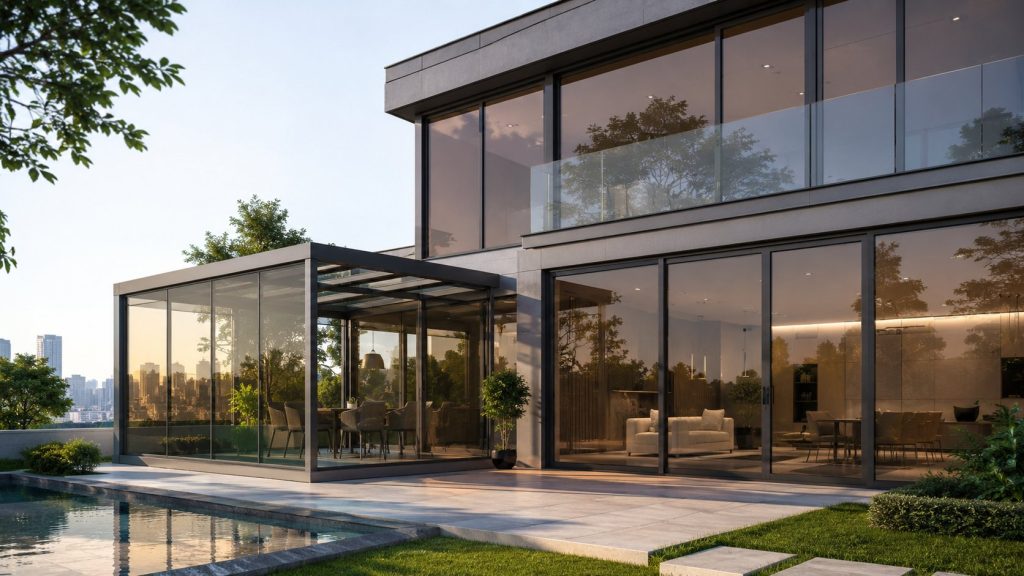
Still, selecting tinted glass is not simply a matter of choosing grey, bronze, blue or green. The glass tone must work with the building’s orientation, climate, glazing dimensions, framing system and expected thermal performance. A beautiful sample may look very different once installed across an entire sun-facing façade.
This guide examines where tinted glass is used, what it can realistically achieve and which technical values should be reviewed before it becomes part of an architectural specification.
What Is Tinted Glass?
Tinted glass is glass that has been given a visible color to alter its appearance and the way it interacts with light. In traditional body-tinted glass, selected metal oxides are introduced during production. The resulting color runs through the glass rather than sitting only on its surface.
Because the glass absorbs part of the incoming solar energy and visible light, it can reduce brightness and influence interior comfort. The actual result, however, depends on the glass composition, thickness, color and any additional coatings or insulating layers.
Body-Tinted Glass
Body-tinted glass commonly appears in grey, bronze, blue and green tones. Its color generally becomes deeper as the glass thickness increases, so two products described with the same color name may not look identical in practice.
This type of glass is often chosen when architects want consistent color across windows, doors or façade sections. It can also be processed into tempered, laminated or insulating glass configurations when the selected product and manufacturing process allow it.
Coated Glass and Tinted Window Film
Tinted glass, coated glass and tinted film should not be treated as interchangeable terms. Reflective glass uses a coating to redirect a greater portion of solar radiation, while Low-E glass is mainly designed to control heat transfer through the glazing.
Window film, by comparison, is normally applied to an existing glass surface. It may be useful in refurbishment projects, but its appearance, durability and compatibility depend heavily on product quality and installation conditions.
Why Is Tinted Glass Used in Modern Architecture?
Architects rarely choose tinted glass for one reason alone. In most projects, the decision combines visual design with practical goals such as glare management, solar control or greater separation between indoor and outdoor areas.
Solar Heat and Glare Control
Large glazed surfaces bring daylight deep into a building, but they can also create uncomfortable brightness. This is especially noticeable in west-facing offices during the afternoon or in restaurants where direct sun reaches dining areas.
Tinted glass can absorb a portion of the incoming solar energy and reduce visible brightness. Yet a darker pane does not automatically deliver the best thermal result. The Solar Heat Gain Coefficient, glass build-up, façade orientation and shading strategy remain essential parts of the decision.
Daytime Privacy Without Losing the View
One reason tinted glazing feels appealing is that it can make an interior less visible from outside during daylight hours. Occupants may still retain a useful outward view, which is particularly valuable in street-level offices, urban homes and hospitality spaces.
There is an important limitation. Privacy changes as lighting conditions change. Once the interior becomes brighter than the exterior at night, people outside may see in more easily. Curtains, screens or other privacy measures may therefore remain necessary.
Architectural Identity
Glass color can dramatically change how a building is perceived. Grey glass tends to create a restrained, contemporary appearance, while bronze tones often feel warmer and more connected to natural stone or timber. Blue and green glazing can create a cooler or more landscape-oriented character.
We believe the strongest designs are usually those in which the glass tone supports the wider material palette. Aluminum profiles, façade cladding, flooring, interior finishes and surrounding buildings should all be considered before a final selection is approved.
UV and Interior Protection
Some tinted glass combinations can help reduce the amount of ultraviolet radiation entering a space. This may support the protection of furniture, textiles, artwork and interior finishes from premature fading.
Glass color alone should not be treated as proof of UV performance. Project teams should review the product’s declared UV transmission value and consider laminated or coated configurations where stronger protection is required.
Tinted Glass Applications in Modern Architecture
Tinted glass can appear in almost every part of a modern building envelope. Its suitability depends on how the area is used, how much sun it receives and whether the glazing is fixed, sliding, overhead or required to act as a safety barrier.
Building Façades and Curtain Walls
On commercial façades, tinted glass can create a more uniform exterior while reducing excessive brightness inside. It is frequently used to coordinate vision areas with spandrel zones, metal panels or aluminum cladding.
Exterior reflectance also deserves attention. A façade that looks elegant in a small sample may become highly reflective across thousands of square metres. Full-size mock-ups help designers assess color consistency, reflections and changes in appearance under different sky conditions.
Windows, Doors and Sliding Glass Systems
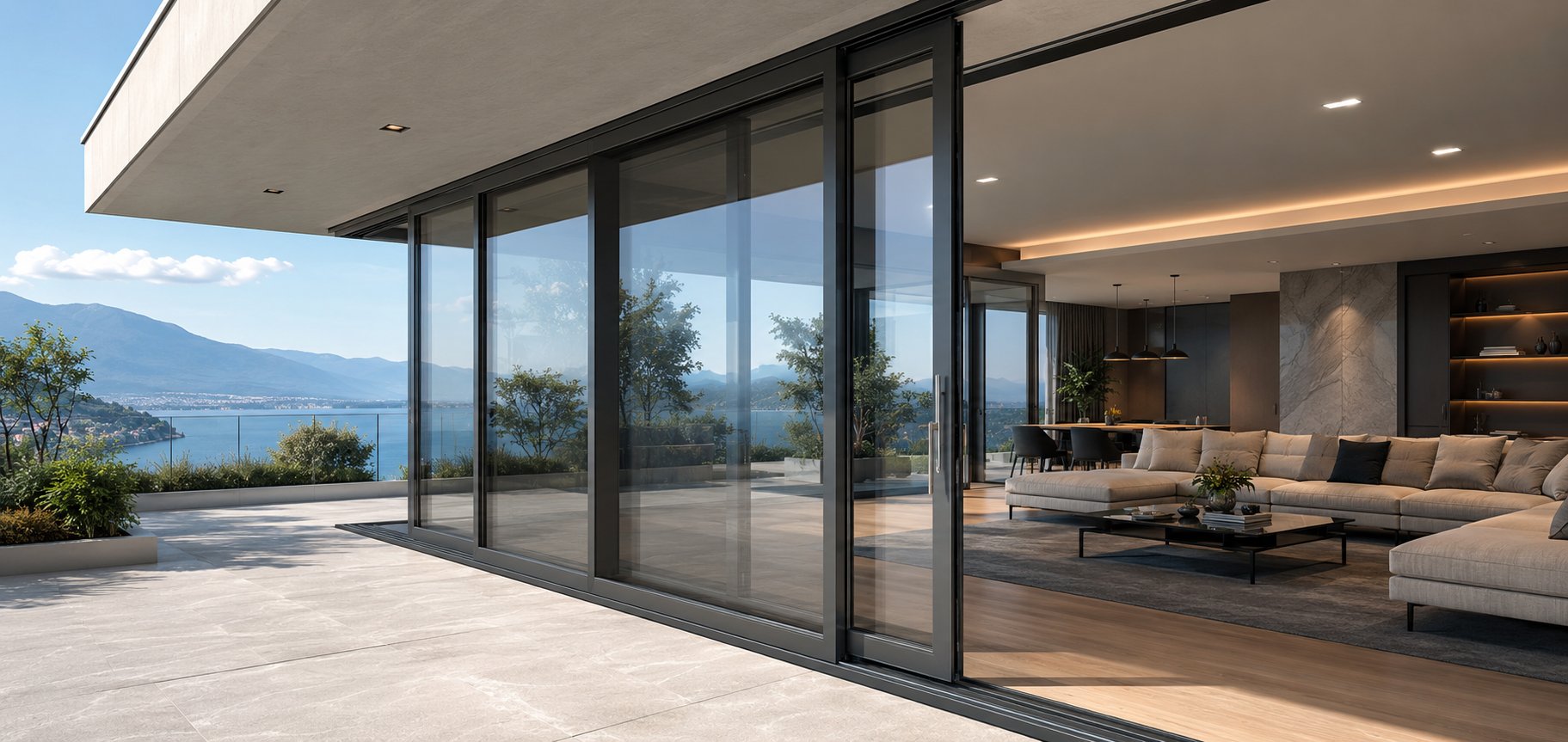
Floor-to-ceiling windows and wide sliding doors are central features in many contemporary homes and hospitality projects. Tinted glazing can make these large openings more comfortable without completely removing the visual relationship between interior and landscape.
The glass must be evaluated as part of the complete opening system. Frame strength, drainage, seals, hardware and panel weight all influence performance. Project teams comparing integrated solutions can review TGP Systems’ architectural aluminum glazing systems when planning fixed or movable glazed areas.
Patio, Balcony and Winter Garden Enclosures
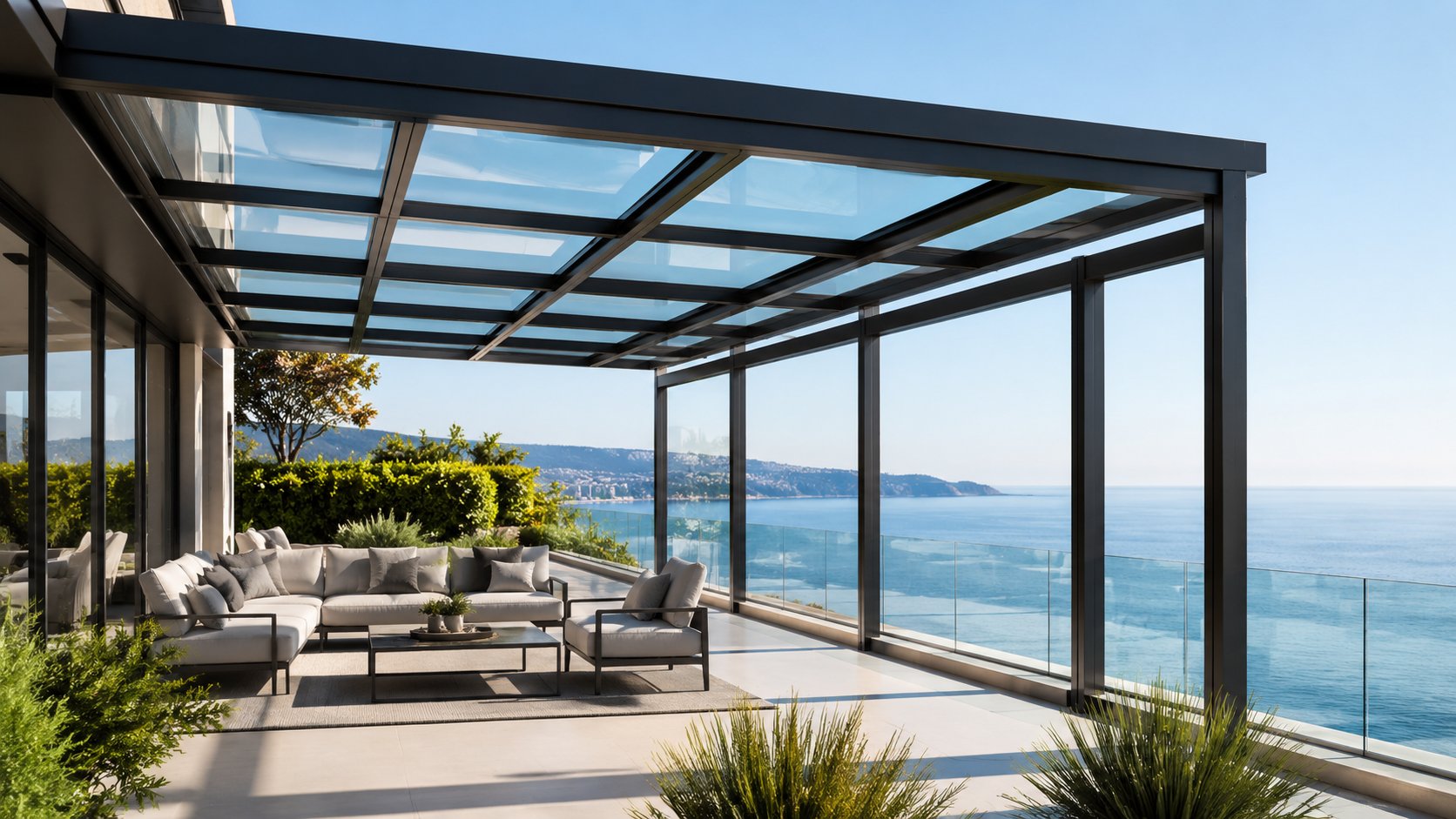
Tinted glass is especially useful in outdoor living spaces that receive direct sun for long periods. A restaurant terrace may need glare reduction during lunchtime, while a residential balcony may require greater daytime privacy without becoming visually enclosed.
Vertical panels and glass roofs should not automatically use the same specification. Overhead glazing typically receives more direct solar exposure and may require a different combination of tint, coating, lamination and insulation.
For projects that aim to extend the seasonal use of terraces, TGP Systems’ glass patio enclosure solutions provide a practical starting point for assessing panel movement, framing requirements and compatibility with project-specific glazing.
Glass Railings and Balustrades
Tinted glass can add subtle privacy and visual depth to balcony, terrace, staircase and poolside railings. Grey or bronze panels often work well with dark aluminum profiles and minimalist architectural details.
Safety must come before color. The required tempered or laminated configuration, glass thickness, panel dimensions and fixing method should be established according to structural calculations and local regulations. Minimal glass channel systems for modern balustrades can help preserve clear sightlines while supporting a refined architectural appearance.
Skylights and Glass Roofs
Overhead glazing can introduce impressive natural light, but it also faces strong solar exposure. Tinted glass may reduce brightness and help control solar gain in atriums, conservatories, walkways and glazed roof structures.
These applications require careful attention to safety glazing, thermal stress, water drainage and the placement of coatings. Laminated glass is often considered for overhead safety, although the final configuration must always follow project engineering and applicable standards.
Interior Partitions and Decorative Features
Inside buildings, tinted glass can divide spaces without making them feel fully closed. It is used in offices, meeting rooms, hotel lobbies, restaurants, wellness areas and decorative wall installations.
Here, thermal performance may be less important than light transmission, privacy and color rendering. A dark bronze partition can create a warm atmosphere, while grey glass may suit a quieter, more corporate interior.
Popular Tinted Glass Colors and Their Design Effects
Grey Tinted Glass
Grey is one of the most versatile choices for contemporary architecture. It pairs naturally with black, anthracite and metallic finishes and can reduce visual brightness without introducing a strong color cast.
It is widely suited to offices, apartment buildings, modern villas and commercial interiors. Darker grey tones should still be tested carefully, as they may reduce daylight more than expected.
Bronze Tinted Glass
Bronze glass creates a softer and warmer visual effect. It often complements timber, beige stone, copper-colored surfaces and earth-toned interiors.
For that reason, it is popular in premium residential developments, hotels and restaurants. In our view, bronze works best when it is treated as part of the wider material concept rather than as an isolated decorative feature.
Blue Tinted Glass
Blue glass can create a clean, technical appearance, particularly on commercial façades. It may also reflect the sky and surrounding environment in a visually striking way.
That effect changes according to weather, orientation and external lighting. Designers should examine full-size samples outdoors instead of relying only on digital renders.
Green Tinted Glass
Green glazing often connects well with landscaped surroundings. It can feel appropriate in hospitality, healthcare, recreational and nature-focused developments.
However, strong green tones may influence how interior colors are perceived. Material samples should therefore be reviewed from both sides of the glass.
Key Performance Values to Check
A glass color may look right and still be technically unsuitable. Before specification, the architect, façade consultant and system supplier should review the values that directly affect daylight, heat transfer and user comfort.
| Performance Value | What It Indicates | Why It Matters |
|---|---|---|
| Visible Light Transmittance | The proportion of visible light passing through the glass | Influences daylight levels and interior brightness |
| Solar Heat Gain Coefficient | The amount of solar energy entering through the glazing | Helps assess solar heat control |
| U-Value | The rate of heat transfer through the complete glazing assembly | Supports thermal insulation decisions |
| Exterior Reflectance | The amount of visible light reflected outside | Affects façade appearance and surrounding areas |
| UV Transmission | The amount of ultraviolet radiation passing through the glass | Relevant to interior fading and material protection |
Visible Light Transmittance
Visible Light Transmittance, usually shortened to VLT, shows how much visible light passes through the glazing. A low VLT can help with intense brightness, but it can also make an interior unnecessarily dark.
The right value depends on the use of the room, window area and availability of artificial lighting. A large façade with a moderate tint may provide better daylight balance than a small opening with very dark glass.
Solar Heat Gain Coefficient
SHGC indicates how much solar heat enters through the glazing. Lower values can be useful in hot climates and sun-exposed façades, while other conditions may benefit from a more balanced approach.
It should not be confused with U-value. SHGC relates to solar energy, whereas U-value describes heat transfer through the complete glazing assembly.
Glass Safety, Thickness and Weight
Large glass panels can become extremely heavy. Sliding mechanisms, channels, frames and hardware must therefore be selected for the actual panel dimensions and glass build-up.
Tempered, heat-strengthened, laminated and insulating glass units behave differently. The correct option depends on location, impact risk, structural loads, overhead use and local safety requirements.
Tinted Glass vs Other Architectural Glass Types
| Glass Type | Primary Purpose | Main Advantage | Important Limitation |
|---|---|---|---|
| Tinted Glass | Color and brightness control | Consistent architectural tone | Tint alone does not guarantee strong insulation |
| Reflective Glass | Solar reflection and daytime privacy | Stronger exterior reflectance | May create glare outside the building |
| Low-E Glass | Thermal performance | Reduces heat transfer | Requires correct coating placement |
| Smart Glass | Adjustable light or privacy control | Dynamic performance | More complex and generally more expensive |
| Tinted Film | Retrofitting existing glazing | Can be installed without replacing the glass | Appearance and durability depend on installation quality |
There is no single best type of architectural glass. The most appropriate choice depends on climate, façade orientation, privacy expectations, energy targets, budget and the way occupants use the building.
How to Choose Tinted Glass for a Project
Define the Main Objective
Start by deciding what the glass needs to achieve. Is the priority glare reduction, daytime privacy, color, solar control or interior comfort? Trying to solve every issue with a darker tint usually leads to compromise.
Evaluate Orientation and Climate
East- and west-facing façades can experience intense low-angle sunlight. South-facing areas may receive prolonged exposure, while northern elevations often have different daylight needs.
Climate also matters. A glazing strategy suitable for a hot coastal city may not be appropriate for a colder region where passive solar gain has value.
Review the Complete Glazing System
Glass performance cannot compensate for unsuitable framing, weak seals or undersized hardware. The specification should include profiles, thermal breaks, gaskets, drainage, locks, handles, glass supports and movement mechanisms.
TGP Systems distinguishes itself by approaching architectural glazing as a coordinated system rather than an isolated pane of glass. This makes it easier for architects, fabricators and contractors to consider appearance, operation and long-term functionality together.
Request Samples and Technical Data
Ask for physical samples and review them outdoors, indoors, in direct sunlight and under artificial light. The same glass can look surprisingly different throughout the day.
Technical documentation should include VLT, SHGC, U-value, reflectance, UV transmission, thickness, safety classification and compatible processing options. For major façades, a full-scale mock-up is often worth the effort.
Compare Total Project Value
The lowest initial price does not always create the lowest project cost. Compatibility problems, difficult installation, inadequate hardware or limited replacement support can become expensive later.
TGP Systems offers a broad ecosystem of aluminum profiles, channels, glazing solutions and movable systems for residential, hospitality and commercial projects. Its practical value lies in coordinating components around the application instead of treating every project as though it needs the same standard solution.
Plan Your Tinted Glass Application with the Right System
Tinted glass can transform the character of a building, but the best results come from informed coordination. Glass tone, light transmission, safety requirements, framing and panel movement must all work together.
Planning a façade, patio, balcony or sliding glass application? Share the project location, approximate dimensions, opening type, preferred glass color and performance goals with TGP Systems. The team can help you evaluate a compatible architectural solution and prepare a project-focused quotation.
Frequently Asked Questions About Tinted Glass
What is tinted glass used for in architecture?
Tinted glass is used in façades, windows, sliding doors, patio enclosures, balcony systems, glass roofs, railings and interior partitions. Architects choose it to influence daylight, reduce glare, improve daytime privacy and create a specific exterior or interior appearance.
Does tinted glass reduce heat inside a building?
It can reduce part of the solar energy entering a space, but the result depends on the glass composition and SHGC value. Strong thermal performance may also require Low-E coatings, insulating glass units, suitable framing and external shading.
Is tinted glass energy efficient?
Tinted glass may contribute to energy performance by controlling solar gain, but tint alone does not make glazing energy efficient. The U-value, SHGC, spacer, cavity, coating and frame design must be assessed as a complete system.
Does tinted glass provide privacy at night?
Not reliably. Tinted glass generally provides greater privacy when the exterior is brighter than the interior. At night, illuminated rooms may become visible from outside, so curtains, blinds or screens may still be needed.
What is the difference between tinted and reflective glass?
Tinted glass mainly absorbs part of the incoming light and solar energy, while reflective glass uses a surface coating to reflect more of it. Reflective glass often creates a more mirror-like exterior appearance and stronger daytime privacy.
Can tinted glass be tempered?
Many tinted glass products can be tempered, depending on the glass type and manufacturer. Tempering increases resistance to impact and thermal stress, but the required safety configuration should be confirmed before the glass is ordered or processed.
Can tinted glass be laminated?
Yes, suitable tinted glass can often be incorporated into laminated glass. Lamination helps keep broken fragments attached to an interlayer and may improve safety, security, acoustic performance and UV control depending on the selected construction.
Which tinted glass color is best for a modern building?
There is no universal best color. Grey suits neutral, minimalist designs; bronze complements warm materials; blue creates a cooler commercial appearance; and green can connect a building with landscaped surroundings. Samples should always be reviewed under real lighting conditions.
Is darker tinted glass always better for solar control?
No. A darker appearance may reduce visible light, but it does not automatically provide the best SHGC or insulation value. Excessively dark glass can also increase reliance on artificial lighting and change interior color perception.
Can tinted glass be used in double glazing?
Yes, compatible tinted glass can be included in an insulating glass unit. It may be combined with clear glass, laminated glass or selected coatings to balance daylight, solar control, safety and thermal insulation.
Is tinted glass suitable for patio enclosures?
It can be a practical choice for patios, terraces and balcony enclosures that receive strong sunlight. The glass should be selected alongside the framing system, panel dimensions, movement mechanism, safety requirements and expected weather exposure.
Does tinted glass block UV rays?
Tinted glass may reduce some UV transmission, but the degree of protection varies. Projects involving valuable furniture, artwork or sensitive interior finishes should compare declared UV values and consider laminated or specially coated glazing where necessary.
Can tinted glass be used for railings?
Yes, tinted glass can be used in railings when the complete assembly satisfies structural and safety requirements. Glass type, lamination, thickness, panel size, edge quality and channel or fixing method must be determined for the specific installation.
How should tinted glass be cleaned?
Most uncoated tinted glass can be cleaned with soft cloths, clean water and non-abrasive glass products. Coated surfaces and applied films may require special care, so cleaning instructions from the glass or film manufacturer should be followed.
Have a project where tinted glazing could improve comfort or architectural character? Share this guide with your design team and tell us which glass tone you are considering.


Leave a Reply
You must be logged in to post a comment.