
Aluminum Window and Door Maintenance Tips
Aluminum windows and doors are built to withstand years of everyday use, but they still need occasional care. Dust settles in sliding tracks, weather seals wear down, and drainage openings can become clogged without anyone noticing. Over time, these small issues can make a window harder to operate or allow unwanted air and moisture inside.
Fortunately, most routine aluminum window maintenance doesn’t require specialized equipment. A soft cloth, the right cleaning solution, and a little attention to moving parts can go a long way toward keeping your windows and doors in good condition.
Below, you’ll find practical advice on cleaning aluminum frames, maintaining sliding mechanisms, checking seals, and spotting problems before they turn into expensive repairs. We’ll also cover seasonal upkeep and the precautions that come with motorized window systems.
Why Is Regular Aluminum Window and Door Maintenance Important?
Aluminum has a natural advantage over many other materials: it forms a protective oxide layer that helps resist corrosion. Architectural window frames often receive an additional powder-coated or anodized finish. These treatments protect the surface and help it retain its appearance, but they don’t eliminate the need for maintenance.
Consider what happens around a window over several months. Dust collects along the tracks, seals are exposed to changing temperatures, and hardware experiences repeated movement. Near the coast, salt deposits add another concern. None of these conditions necessarily causes immediate damage, though their effects can become noticeable when regular care is neglected.
Keeping up with aluminum window care helps:
- Preserve the appearance of powder-coated and anodized aluminum frames.
- Keep dirt from accumulating around tracks, hinges, and locking mechanisms.
- Maintain clear drainage paths and reduce unwanted water buildup.
- Catch deteriorating weatherstripping before drafts or leaks become more noticeable.
- Identify developing mechanical problems while they’re still manageable.
There’s a performance benefit, too. A properly installed window relies on functioning seals, hardware, and drainage to maintain its intended weather resistance and thermal performance. Cleaning won’t fix a poorly designed system, but neglected components can compromise one that was working perfectly well.
How Often Should Aluminum Windows and Doors Be Maintained?
There isn’t a single maintenance schedule that works for every aluminum window or door. A sheltered bedroom window faces very different conditions from a sliding patio door overlooking the ocean. How often the system is used matters as well.
For an average residential property, checking and cleaning accessible frames and moving parts every few months is a sensible starting point. Plan for a more thorough inspection at least annually, unless the manufacturer recommends a different schedule.
Coastal homes, properties near busy roads, and buildings exposed to construction dust may need attention more often. Salt and fine particles tend to collect in corners and narrow tracks, where they’re easy to overlook during ordinary cleaning.
How to Clean Aluminum Window and Door Frames
Cleaning aluminum frames is usually straightforward. The bigger concern is using something too aggressive. A harsh chemical or abrasive pad can leave marks on a protective finish that ordinary dirt never would have caused.
Before you start, find out whether the frames are powder-coated, anodized, or treated with another specialized finish. That determines which cleaning products are suitable. If the manufacturer provides care instructions, follow those rather than relying on a general household cleaning method.
Best Cleaning Products for Aluminum Frames
For everyday aluminum frame cleaning, mild products are generally all you need:
- Clean water to remove loose dirt and rinse away residue.
- A soft microfiber cloth or nonabrasive sponge for wiping the frames.
- A mild, pH-neutral cleaner approved for the surface finish.
- A soft-bristled brush to reach accessible grooves and corners.
- A clean, dry cloth to remove leftover moisture.
Keep steel wool, abrasive cleaning powders, strong acids, alkaline cleaners, and aggressive solvents away from the frames unless the manufacturer explicitly approves them. Pressure washing isn’t a good substitute for careful cleaning either. A concentrated jet can drive water past seals and into places it wasn’t meant to reach.
Step-by-Step Aluminum Frame Cleaning
- Start with the loose dirt. Brush or wipe away dust, sand, and other particles before applying water. This helps prevent grit from scratching the finish.
- Mix your cleaning solution. Use a suitable neutral cleaner diluted according to its instructions.
- Clean the aluminum gently. Work across the frame with a soft cloth, spending a little more time on corners and areas where dirt tends to collect.
- Remove the residue. Rinse carefully with clean water or wipe with a damp cloth. Avoid directing excessive water into joints and frame cavities.
- Dry the surfaces. Finish with a clean microfiber cloth, especially around edges and joints where moisture can linger.
Trying a new cleaning product? Test it on a small, inconspicuous section first. Also, don’t assume a product labeled as a glass cleaner is safe for the surrounding aluminum. Glazing, painted frames, rubber gaskets, and metal hardware don’t always tolerate the same chemicals.
Aluminum Sliding Window and Door Maintenance
A sliding door that once moved with a light push can gradually become stiff or noisy. Often, the first thing worth checking is the track. Dirt and grit can interfere with smooth movement, particularly when a heavy glass panel runs on rollers.
Regular aluminum sliding door maintenance starts with keeping the accessible tracks and drainage areas clean. Roller adjustments and panel removal are a different matter and shouldn’t be treated as ordinary cleaning tasks.
How to Clean Sliding Door and Window Tracks
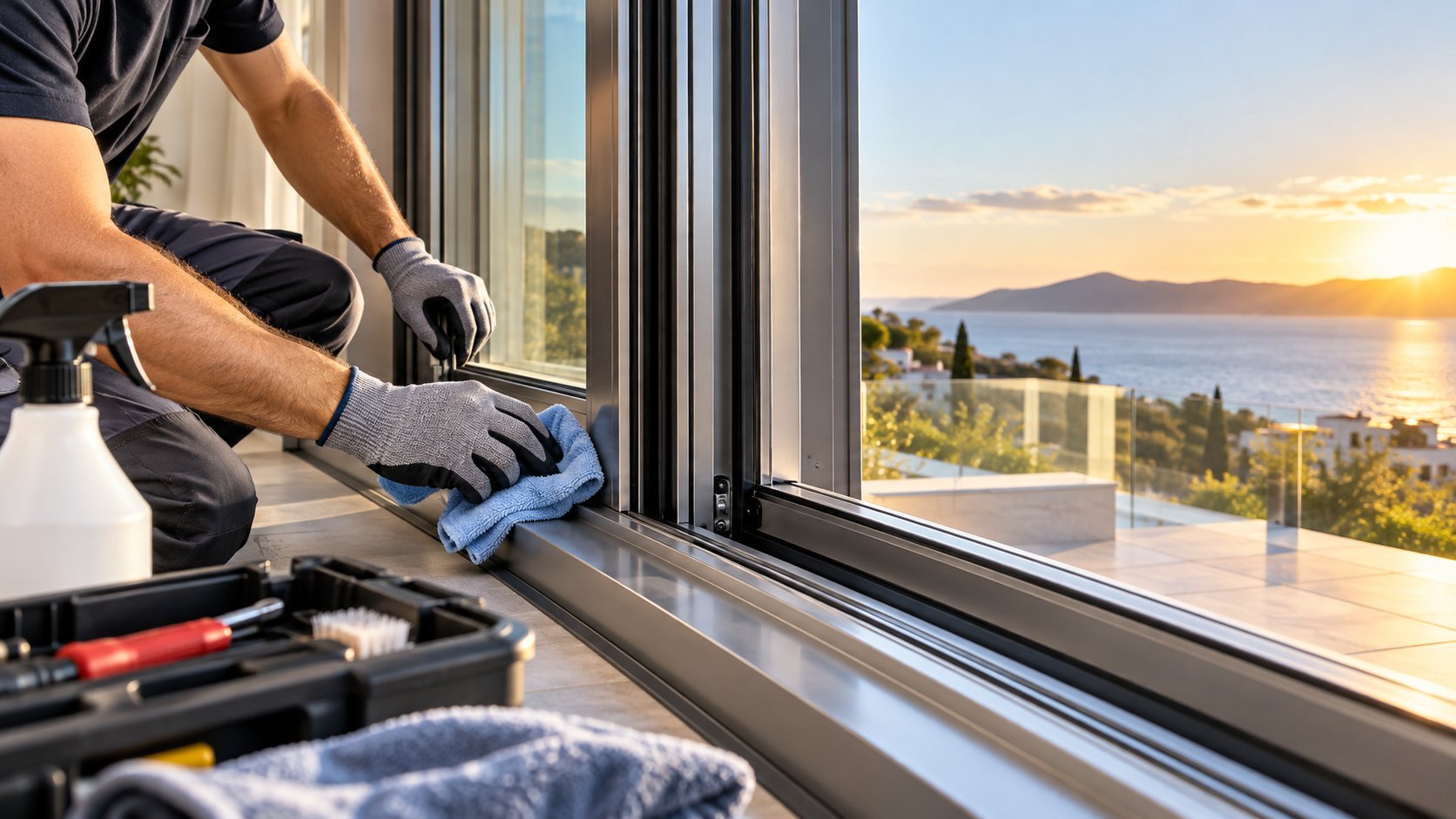
Open the sliding panel far enough to expose the accessible track. Use a vacuum with a narrow attachment or a soft brush to remove loose particles. Follow with a damp cloth to pick up the finer dirt left behind.
Check the corners carefully. Sand and dust often settle there, and it’s easy to push them into a drainage opening while cleaning. Avoid sharp metal tools that might scratch the track surface.
Once everything is clean and dry, move the panel gently to see whether it slides more freely. If it still drags or catches, don’t force it. Worn rollers, incorrect alignment, or another mechanical fault may be responsible.
Track accessibility is worth thinking about before purchasing a new system, too. When comparing aluminum sliding windows, look beyond the frame design and opening dimensions. Consider how easily the tracks, drainage areas, and serviceable hardware can be reached for future maintenance.
How to Maintain Rollers and Sliding Mechanisms
Rollers carry the weight of a sliding panel, so their condition has a direct effect on how the window or door feels in use. Grinding noises, uneven movement, or a sudden increase in resistance can indicate dirt, wear, or an alignment problem.
One mistake worth avoiding is lubricating everything that moves. Some roller assemblies have sealed bearings and aren’t designed for additional oil or grease. Lubricant applied to an exposed track may simply collect more dust.
Check the manufacturer’s instructions before applying anything or attempting an adjustment. If rollers need replacing, the panel is out of alignment, or heavy glazing must be removed, leave the work to a qualified technician.
How to Maintain Window Seals, Gaskets, and Drainage
The aluminum frame is only part of what keeps a window weather-resistant. Gaskets, weatherstripping, glazing components, drainage channels, and installation joints all have jobs to do. A spotless frame won’t prevent drafts if the seals around it have deteriorated.
When inspecting your windows, take a moment to look beyond the visible metal. The condition of the sealing and drainage components can tell you quite a lot about how the complete assembly is holding up.
Checking Weatherstripping and Rubber Seals
Weatherstripping limits unwanted air movement around operable windows and doors. Depending on the design, a system may use rubber gaskets, brush seals, or compression profiles to create the required seal when closed.
Look for cracking, hardened sections, flattened areas, or seals that have pulled away from their original position. Accessible gaskets can be cleaned gently, provided the cleaning product is compatible with the material.
Avoid petroleum-based oils, strong solvents, and conditioning treatments that haven’t been approved for the particular gasket. Some rubber compounds can deteriorate when exposed to unsuitable chemicals.
Damaged seals are generally better replaced with the correct matching profile than patched with adhesive or sealant. The dimensions and compression characteristics matter; a replacement that looks similar isn’t necessarily suitable for the window.
Preventing Water Buildup in Aluminum Window Frames
Many aluminum windows have drainage channels and small openings, often called weep holes, that allow incidental water to escape from designated parts of the frame.
When those openings become blocked, water can remain inside the frame longer than intended. Check any visible drainage points and gently remove loose dirt or debris. Don’t enlarge the openings, insert sharp tools, or change their shape.
And never seal a factory-designed drainage opening with silicone. It may look like a convenient way to stop a leak, but blocking the intended water path can make matters worse.
If water repeatedly enters the room, the problem deserves a proper inspection. Damaged joints, faulty installation details, deteriorated seals, or an issue with the drainage arrangement may be involved. Cleaning alone won’t resolve every source of leakage.
Maintenance Tips for Motorized Aluminum Window Systems
Motorized windows need a slightly different approach to maintenance. Alongside the aluminum profiles and glazing, these systems contain drive mechanisms, electrical components, and controls that operate moving panels.
Automated guillotine windows, for instance, move glass panels vertically. Keeping accessible surfaces clean and checking that the movement area is unobstructed are useful routine tasks. You should also pay attention to changes in operating speed, unusual sounds, or inconsistent responses to the controls.
Owners of motorized guillotine window systems should follow the maintenance procedures for their particular model. Drive components, control electronics, and any fitted safety features may require inspections that go beyond ordinary frame cleaning.
Only clean areas you can access safely, and isolate the system from power whenever the manufacturer’s instructions require it. Never put your hands inside moving assemblies, try to hold up a heavy glass panel, or bypass a safety feature to get the window working again.
When Should You Call a Professional Technician?
If a motorized window stops unexpectedly, moves unevenly, makes unfamiliar mechanical noises, or shows signs of an electrical fault, stop using it and arrange professional service.
The same applies when a fitted safety sensor, obstruction-detection feature, or control mechanism isn’t behaving as the manufacturer specifies. Continuing to operate a faulty system can create additional mechanical or safety risks.
Electrical testing, internal motor repairs, drive adjustments, and heavy glazing removal belong in the hands of qualified personnel, not on a homeowner’s routine maintenance checklist.
Common Aluminum Window and Door Problems and Solutions
A window that’s difficult to close doesn’t necessarily need replacing. Dirt, a worn seal, or a hardware issue may be all that’s wrong. Still, similar symptoms can have different causes, so it’s worth identifying the problem before deciding what to do.
| Problem | Possible Cause | Recommended Action |
|---|---|---|
| Sliding panel is difficult to move | Dirty tracks, worn rollers, or misalignment | Clean accessible tracks. If movement doesn’t improve, arrange a hardware inspection. |
| Air enters around a closed window | Worn seals, insufficient compression, or closure alignment problems | Check visible gaskets and have the closing mechanism inspected if necessary. |
| Water collects inside the frame | Blocked drainage, damaged joints, or installation defects | Remove accessible debris and have recurring leaks professionally investigated. |
| Window squeaks during operation | Friction, contaminated components, or worn hardware | Clean accessible areas and follow the approved servicing instructions. |
| Condensation appears on the glass | Indoor humidity, cold surfaces, or thermal performance limitations | Manage indoor humidity and establish where the condensation is forming. |
| Frame has persistent stains | Environmental deposits or deterioration of the surface finish | Try approved cleaning methods and consult a specialist if the coating appears damaged. |
Condensation is a good example of why diagnosis matters. Moisture forming on the room-facing side of the glass is not the same as fogging trapped between the panes of an insulated glazing unit. The first may be related to humidity and surface temperature; the second often points to a failed glazing seal. Cleaning the glass won’t repair that seal.
Seasonal Aluminum Window and Door Maintenance Checklist
It’s easier to deal with a small issue during a routine inspection than to discover it when a door refuses to close or rain starts coming through a window. A seasonal checklist gives you a manageable way to keep track of the areas that deserve attention.
| Period | Maintenance Task | What to Check |
|---|---|---|
| Spring | Clean frames and glazing | Winter residue, surface deposits, and the visible condition of protective finishes |
| Summer | Inspect sliding tracks and operating hardware | Dust buildup, smooth movement, and any unusual resistance |
| Fall | Check seals and drainage | Damaged gaskets, trapped debris, and accessible drainage openings |
| Winter | Observe weather performance | Drafts, condensation, water ingress, and difficulty closing windows |
| After severe weather | Carry out an additional visual inspection | Debris, displaced seals, unusual movement, and visible damage |
For a coastal home, this schedule may need a few extra cleaning sessions to remove salt deposits. Windows close to active construction sites can also collect fine grit much faster than those in quieter surroundings.
Use the checklist as a starting point, then adjust it to the conditions around your property and the maintenance instructions supplied with your windows and doors.
When Should You Repair or Replace Aluminum Windows?
Repair usually makes sense when the aluminum frame is still structurally sound and the fault involves a replaceable component. A worn roller, damaged handle, or deteriorated gasket doesn’t automatically mean the entire window has reached the end of its life.
Replacement becomes worth considering when the frame is permanently distorted, water leakage keeps returning despite appropriate repairs, compatible parts can no longer be obtained, or the system no longer delivers the performance the property needs.
Energy efficiency may influence the decision as well. Older aluminum windows without effective thermal breaks or suitable glazing can provide less insulation than appropriately specified modern systems. Replacing a handle or roller won’t change the thermal characteristics of the original frame.
When comparing replacements, look at the complete assembly. Profile construction, glazing, air and water performance, hardware, installation requirements, and future maintenance access all deserve consideration.
Reviewing modern aluminum window systems can help property owners and building professionals compare configurations against the architectural, functional, and maintenance requirements of a particular project.
How TGP Systems Supports Long-Term Aluminum Window Performance
A window’s long-term performance starts with the specifications chosen for its intended location. A sheltered residential opening and an exposed coastal installation may call for different operating mechanisms, weather-resistance characteristics, and maintenance arrangements.
That distinction matters when reviewing the aluminum window and architectural solutions available from TGP Systems. With sliding and motorized configurations among its product offerings, the range gives architects, contractors, and property owners different systems to assess against opening dimensions, design requirements, operating preferences, and project conditions.
Purchase price is only part of that assessment. The accessibility of hardware, suitability of surface finishes, availability of compatible components, and expected servicing requirements can all affect what a window costs to own over the years.
Our view is that maintenance should be discussed while a system is being selected, rather than becoming an afterthought once it’s installed. A suitable product specification and proper care work together; neither replaces the other.
Looking for a Long-Term Aluminum Window Solution?
Regular maintenance can keep an existing window or door in good working order, but there comes a point when a different system may be the more practical option. Explore TGP Systems’ aluminum window solutions to compare designs and operating configurations against your property’s requirements, including the maintenance they’ll need over time.
Frequently Asked Questions About Aluminum Window Maintenance
How often should aluminum windows be cleaned?
For many homes, cleaning and checking accessible aluminum frames every few months is a reasonable starting point. The actual frequency depends on exposure and the manufacturer’s recommendations. Windows near the sea, industrial facilities, or dusty roads may need more frequent cleaning to prevent deposits from building up on the finish.
Can you use vinegar to clean aluminum window frames?
Vinegar isn’t a good default choice for cleaning aluminum frames. Its acidity may affect certain powder-coated or anodized finishes, depending on concentration and contact time. For routine cleaning, use a mild, pH-neutral product that the frame manufacturer approves. It’s a safer approach than experimenting with acidic household cleaners.
Should aluminum sliding door tracks be lubricated?
Not necessarily. Some sliding systems use sealed rollers that need no additional lubrication. Putting oil or grease directly onto an exposed track can attract dirt and make movement worse. Clean the track first, then check the manufacturer’s instructions to see whether any particular component needs an approved lubricant.
How do you maintain aluminum windows near the ocean?
Remove salt deposits regularly using fresh water and a suitable mild cleaner. Pay attention to exposed frames, accessible tracks, and hardware, where deposits can collect. Coastal conditions can accelerate deterioration of susceptible components, so it’s also worth inspecting fasteners, seals, and surface finishes more frequently than you would in a sheltered inland location.
Do aluminum windows require more maintenance than uPVC windows?
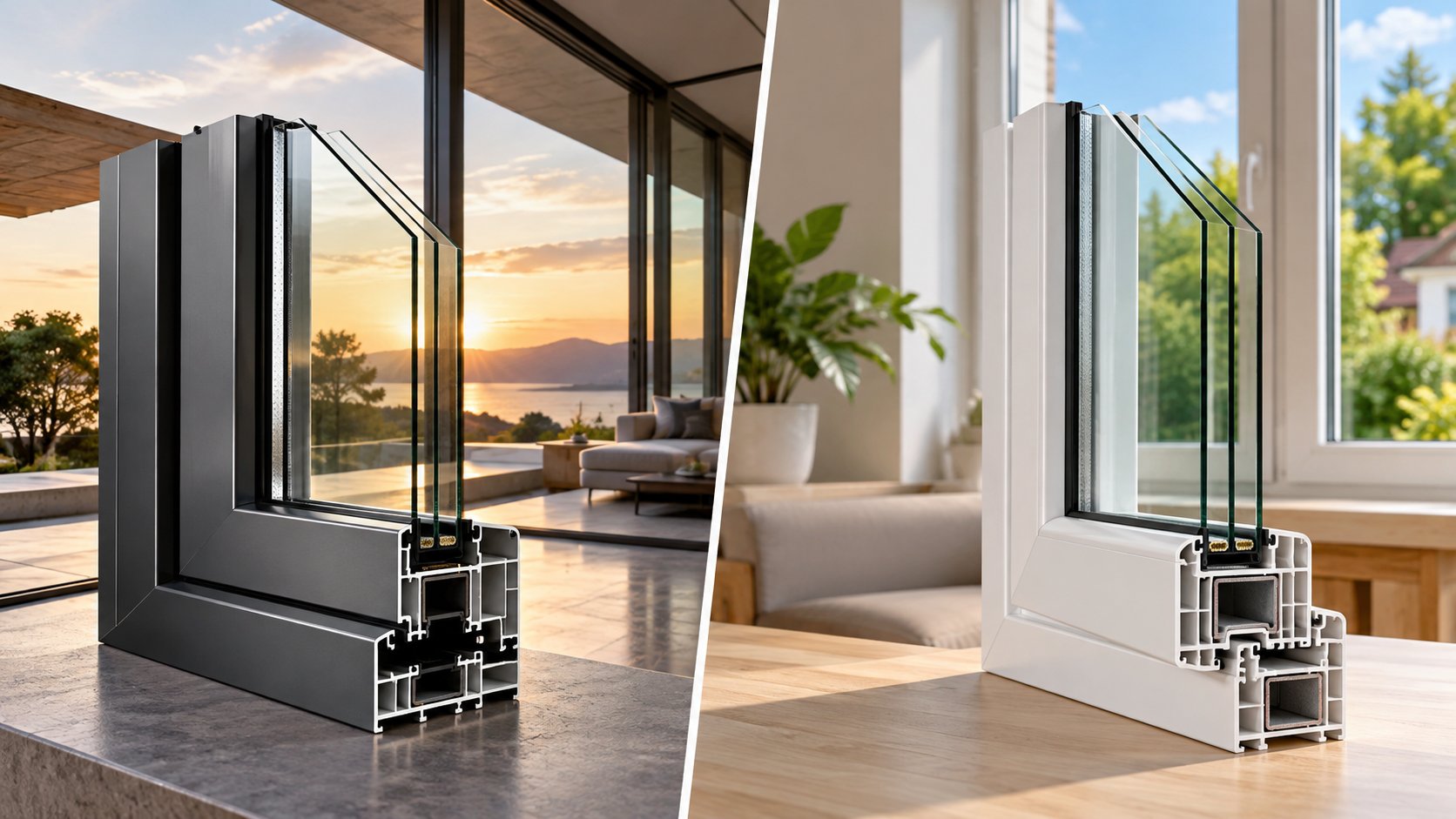
Neither material is completely maintenance-free. Aluminum and uPVC windows both need cleaning, drainage checks, seal inspections, and occasional hardware servicing. How much attention they require depends largely on the design, exposure conditions, and moving components. Their surfaces may need different cleaning products, so always check the relevant care instructions.
What is the best way to remove stains from aluminum window frames?
Start with a soft cloth, clean water, and a mild cleaner approved for the finish. Don’t try to polish stubborn marks away with an abrasive pad. If gentle cleaning doesn’t work, the mark may be more than ordinary dirt. Establish whether you’re dealing with contamination or damage to the coating before attempting stronger treatment.
Why is my aluminum sliding door difficult to open?
Dirt in the track is one possible cause, but worn rollers, panel misalignment, or damaged hardware can produce the same symptom. Clean the accessible track and remove any visible obstruction first. If the door still resists movement, have it inspected rather than forcing it open, especially if it contains a large glass panel.
How can I prevent water from entering through aluminum windows?
Keep accessible drainage openings clear and check for visibly damaged gaskets or joints. Make sure the window closes as intended. If water continues to enter during rain, arrange an inspection. The actual source could be the glazing seals, frame drainage, installation details, or surrounding construction, and each requires a different repair.
Can aluminum window frames corrode or rust?
Aluminum doesn’t develop the red rust associated with iron, but it can corrode. Damaged protective finishes, persistent moisture, aggressive contaminants, and contact with incompatible metals can contribute to deterioration. Regular cleaning helps, particularly in coastal or industrial environments where deposits are more likely to accumulate.
How long do aluminum windows typically last?
A well-designed, properly installed aluminum window can remain in service for decades. Its actual lifespan depends on the frame, finish, glazing, hardware, local conditions, and maintenance history. Rollers, seals, and other replaceable parts may wear out long before the aluminum frame itself needs replacing.
Can damaged aluminum window seals be repaired?
Many worn gaskets and weatherstripping components can be replaced without changing the whole window, provided a correctly matched replacement is available. The seal’s dimensions and compression characteristics need to suit the original system. Fogging between the panes of an insulated glazing unit is a separate issue and may require replacing the affected glass unit.
Is professional maintenance necessary for motorized aluminum windows?
Yes, when the work involves electrical components, drive mechanisms, safety features, or heavy moving panels. Owners can generally handle approved surface cleaning and basic visual checks. Internal repairs, adjustments, and electrical testing should be performed by qualified personnel following the manufacturer’s procedures. Stop using the system if it develops unusual movement or a safety-related fault.
Keep Your Aluminum Windows and Doors Performing at Their Best
You don’t need an elaborate maintenance routine to look after aluminum windows and doors. What matters is dealing with dirt before it builds up, keeping drainage paths clear, checking seals for wear, and paying attention when a moving part starts behaving differently.
A few regular checks can save you from overlooking problems that would otherwise develop quietly. Just keep the limits of DIY maintenance in mind: cleaning and visual inspections are one thing; electrical faults, heavy panels, and mechanical adjustments are another. When in doubt, follow the manufacturer’s guidance or have the system professionally inspected.
Have you dealt with a stubborn sliding track, recurring condensation, or another aluminum window problem? Share what happened in the comments, and pass this guide along to anyone looking for a practical window and door maintenance checklist.



Leave a Reply
You must be logged in to post a comment.