
How to Choose Aluminum Systems for Your Climate
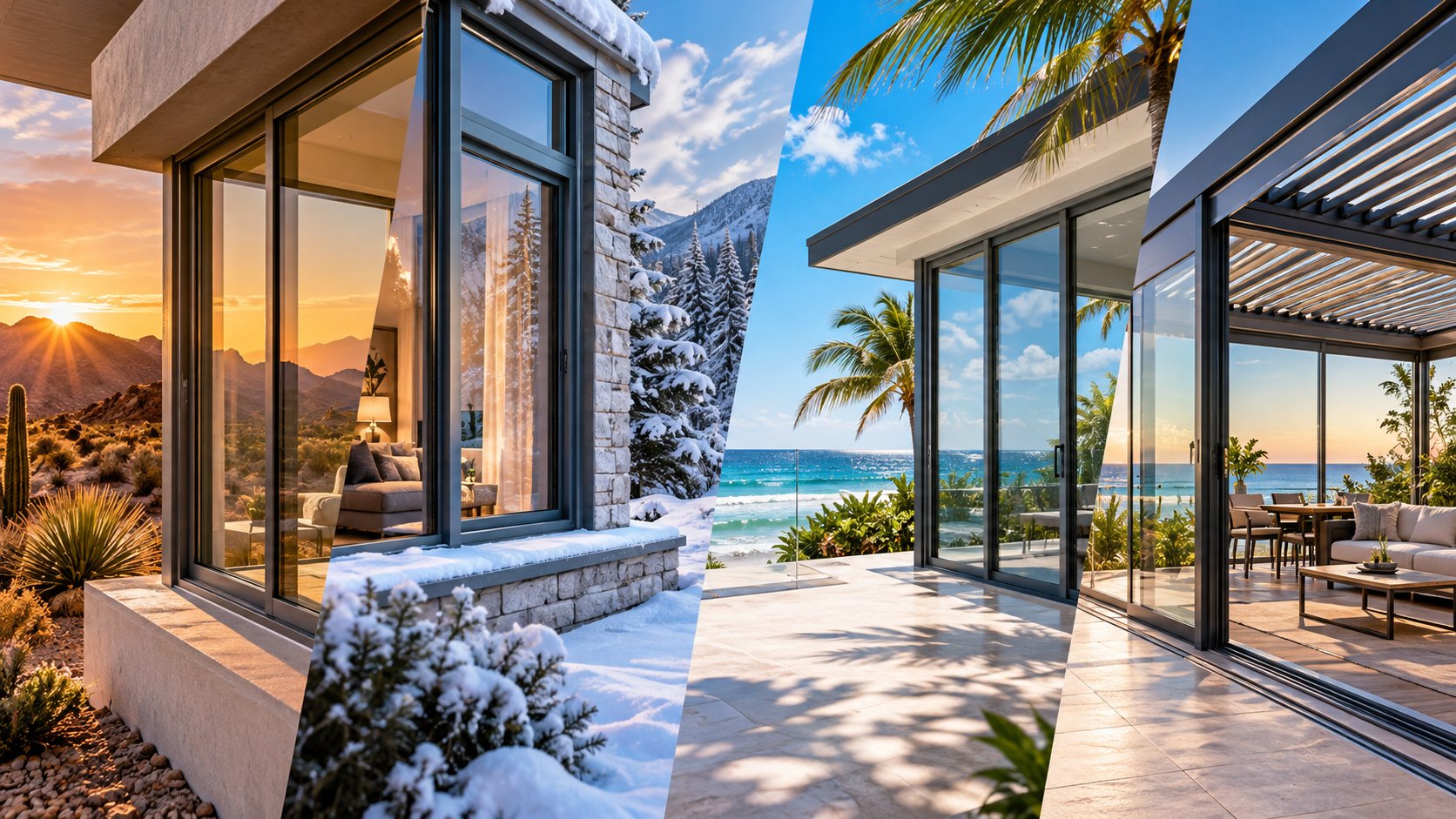
A window that works beautifully in Arizona might be a poor choice for a house on the Florida coast. The frame could look identical, but the conditions it faces are anything but. Desert heat, winter freezes, salty air, and wind-driven rain each put different demands on aluminum windows and doors.
That’s why choosing an aluminum system involves more than comparing frame styles or prices. You need to look at how the entire assembly handles heat transfer, moisture, wind, and everyday use. Glazing, seals, hardware, and installation all affect the result.
Whether you’re replacing windows in a northern home, specifying doors for a new development, or planning an outdoor enclosure, this guide will help you identify which performance features matter in your climate—and which specifications deserve a closer look before you buy.
Why Climate Matters When Choosing Aluminum Windows and Doors
Windows are constantly exposed to conditions that change throughout the day and across the seasons. Sunlight heats the glass, wind pushes against the frame, and temperature differences drive heat through the assembly. Rain and humidity introduce another set of challenges.
Aluminum has some clear advantages as a framing material. It’s strong, allows considerable design flexibility, and works with many glazing configurations. Its main thermal limitation comes from the material itself: aluminum conducts heat readily. Without a suitable thermal barrier, the frame can transfer substantial heat between the outdoors and your living space.
Temperature, Humidity, and Thermal Performance
In a hot region, excessive heat entering through windows can make air conditioning work harder. Move to a northern climate, and the problem reverses. Heat escapes through poorly insulated glazing and frames, leaving rooms colder than they should be.
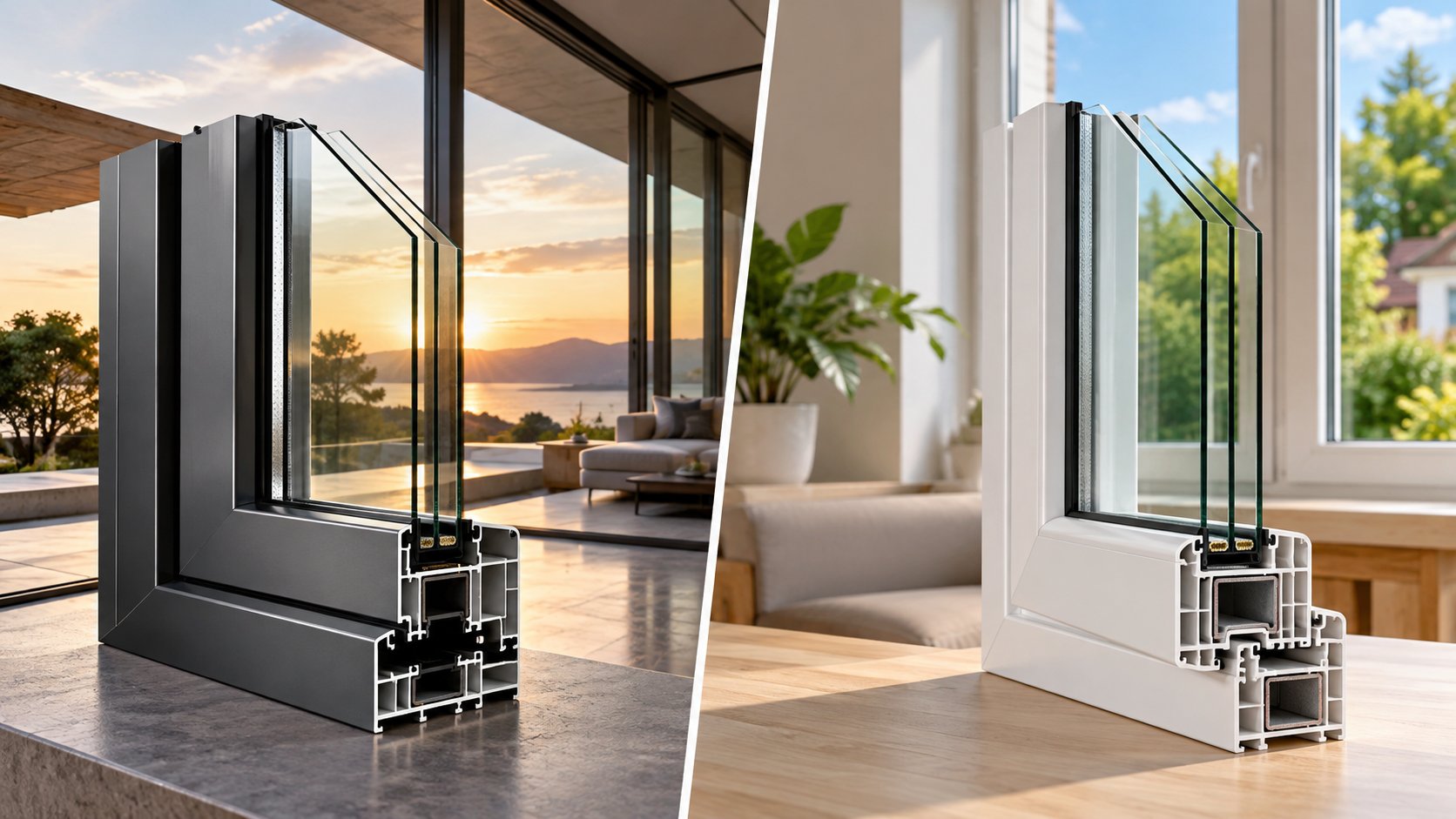
Thermally broken aluminum frames help address that weakness. A less conductive material, often polyamide, separates the inner and outer aluminum sections. Rather than allowing heat to travel directly through a continuous metal frame, the design interrupts that pathway.
Humidity complicates things. When warm indoor air meets a cold window surface, moisture can condense into droplets. Better-insulated frames and glazing help keep interior surfaces warmer, although indoor humidity and ventilation still affect whether condensation develops.
Wind, Rain, and Coastal Exposure
Insulation ratings won’t tell you everything about how a window handles bad weather. A product can perform well thermally yet struggle with water entering around its joints or air leaking past its seals.
Strong winds place pressure on glazing and frames. Wind-driven rain tests the drainage system, weatherstripping, and installation joints. Along the coast, airborne salt can gradually damage exposed components if their materials and protective finishes aren’t suitable.
Rather than searching for one aluminum system that claims to work everywhere, start with the conditions your building actually faces. That gives you a much better basis for comparing products.
Best Aluminum Window Systems for Hot and Sunny Climates
Consider a west-facing living room in Phoenix. By late afternoon, sunlight has been striking the windows for hours, and outdoor temperatures may still be extremely high. Even an attractive, well-built window can become a source of unwanted heat if its glazing isn’t suited to that exposure.
In climates like Arizona’s, solar control deserves particular attention. Frame insulation matters too, but choosing the right glass can make a substantial difference to how much solar heat enters the building.
Thermal Breaks and Solar Heat Gain Control
The Solar Heat Gain Coefficient (SHGC) tells you how much solar heat passes through a complete window assembly. Its rating falls between 0 and 1. The lower the number, the less solar heat the window admits under standardized conditions.
For example, compare two otherwise similar windows rated at 0.25 and 0.50 SHGC. The first admits substantially less solar heat. In a cooling-dominated building with extensive sun exposure, that difference can influence indoor comfort and cooling demand.
Low-emissivity glass, usually called Low-E glass, is another feature worth examining. Its specialized coating can reduce unwanted heat transfer while allowing useful daylight into the room. But don’t assume every Low-E product performs the same way. Coatings differ in solar control, insulation, and visible light transmission.
For hot climates, concentrate on these features:
- Glazing with an SHGC suited to the building’s cooling needs.
- Thermally broken aluminum frames where better insulation is required.
- Low-E glass selected for the local climate and window orientation.
- Exterior shading for windows exposed to intense direct sunlight.
- Reliable air seals that limit uncontrolled infiltration of hot outdoor air.
Orientation deserves its own consideration. A shaded north-facing window and a west-facing window exposed to intense afternoon sun may need different glazing specifications, even though they’re installed in the same house.
Sliding vs. Casement Windows in Hot Weather
Should you choose sliding or casement windows for a hot climate? Both can work well. The better option depends on how you plan to use the opening and the performance of the specific product.
Sliding windows move horizontally within their tracks, making them useful where an outward-opening sash would interfere with a walkway, furniture, or another architectural feature. For these situations, aluminum sliding windows are worth considering, provided their glazing, thermal construction, and seals meet the project’s requirements.
Casement windows swing outward on hinges and can provide generous ventilation when fully open. Many use compression seals that help achieve good air tightness when closed, although this varies by design.
Neither opening style guarantees better energy efficiency. A high-performing sliding window can be a better choice than a poorly specified casement window, and vice versa. The whole-window ratings will tell you more than the operating mechanism alone.
Best Aluminum Windows for Cold and Snowy Climates
In northern climates, heat loss becomes the bigger concern. A window that feels acceptable during autumn may become noticeably cold when outdoor temperatures fall below freezing.
Cold drafts, condensation around the glass, and uncomfortable temperatures near exterior walls can point to weaknesses in glazing, frame insulation, weatherstripping, or installation. Choosing windows for these conditions means looking closely at how well the entire assembly resists heat transfer.
U-Factor, Insulation, and Thermal Break Technology
U-factor measures the rate at which heat passes through a window assembly. In the United States, window ratings commonly use Btu/(h·ft²·°F). Lower numbers mean better resistance to heat transfer.
For a cold-climate home, a low whole-window U-factor is generally desirable. Exactly how low depends on the location, building design, applicable energy codes, and the performance you’re trying to achieve.
Thermally broken aluminum frames help by reducing heat flow through the metal structure. Pair them with appropriate insulated glazing, and the complete window can perform considerably better than a comparable system without a thermal break.
Double glazing uses two panes separated by a sealed cavity. Triple glazing adds another pane and insulating space, which can further reduce heat transfer.
Does that mean triple glazing is always the better purchase? Not necessarily. It’s usually heavier and more expensive, and the frame must be compatible with the additional glazing. The actual improvement needs to justify the cost for your particular building.
Preventing Condensation and Air Leakage
Winter condensation often appears when the interior surface of a window becomes cold enough for moisture in the room’s air to turn into water droplets. High indoor humidity makes this more likely.
Insulated glazing and thermally separated frames can keep interior surfaces warmer, reducing the likelihood of condensation. They can’t eliminate it under every condition, particularly when indoor moisture levels are high or outdoor temperatures are extremely low.
Air leakage creates a different problem. Even small gaps around an operable sash or the perimeter of a poorly installed frame can allow cold air into the room.
Check the window’s tested air leakage performance and the quality of its weatherstripping. Installation deserves just as much scrutiny. A highly rated window won’t deliver its expected performance if substantial gaps remain between the frame and the surrounding wall.
For very cold regions, we would focus on the combination: low U-factor, suitable solar gain, effective seals, and careful installation. None of these should be treated as a substitute for the others.
Choosing Aluminum Systems for Coastal and Humid Climates
Coastal properties deal with conditions that can be particularly hard on exterior building components. Moisture, salt, strong winds, and driving rain may all be present, sometimes during the same storm.
Florida illustrates these challenges well, though a sheltered inland property and a beachfront building won’t necessarily need identical specifications. Local exposure and building requirements matter more than the state name on the address.
Corrosion Resistance and Protective Finishes
Aluminum forms a natural oxide layer that provides some protection against corrosion. That doesn’t make it immune to coastal exposure. Salt deposits, damaged finishes, and contact between incompatible metals can still contribute to deterioration.
Powder coating and anodizing can improve durability when properly specified and applied. Their effectiveness depends on the coating system, surface preparation, environmental conditions, and maintenance.
Be cautious with descriptions such as “marine-grade.” The term alone doesn’t tell you which alloy, finish, fasteners, or corrosion tests apply to a product.
When comparing aluminum window systems for coastal buildings, examine the protective finish, hardware compatibility, drainage design, and cleaning requirements. TGP Systems has aluminum window solutions that buyers can evaluate against these criteria, rather than relying on broad claims of coastal suitability.
Don’t overlook the smaller components. Hinges, rollers, locks, and fasteners are exposed to the same environment as the frame. A durable aluminum profile won’t prevent problems if the hardware deteriorates prematurely.
Wind Resistance, Water Tightness, and Storm Protection
Wind creates positive and negative pressure across a window. When rain accompanies it, water can be pushed toward seals and joints that would remain dry during an ordinary shower.
Three ratings help establish how a system handles these conditions:
- Wind resistance describes the assembly’s ability to withstand specified positive and negative pressures.
- Water penetration resistance indicates how the product performs against water entry under defined laboratory conditions.
- Air leakage performance measures how much air passes through the assembly at a specified pressure difference.
Depending on the product and jurisdiction, testing may involve standards such as AAMA/WDMA/CSA 101/I.S.2/A440, commonly known as NAFS, along with other applicable requirements.
There’s an important distinction in hurricane-prone areas: wind resistance and impact resistance are not the same thing. A window capable of withstanding substantial wind pressure isn’t automatically approved for windborne debris impacts.
Some jurisdictions require impact-resistant assemblies, approved protective systems, or specific product approvals. Confirm the local design pressures, impact requirements, approved installation methods, and applicable building codes before making a final selection.
Aluminum Patio Enclosures for Different Weather Conditions
Windows and doors aren’t the only aluminum systems affected by climate. Patio enclosures, terraces, and outdoor living areas also need designs that account for local weather.
A sheltered patio used mainly during mild evenings has different requirements from an enclosure expected to remain usable through cold winters or frequent storms. How the space will be used matters just as much as where it’s located.
Patio Enclosures for Rain, Wind, and Seasonal Use
Aluminum patio enclosures can make outdoor areas more usable by combining structural framing with glazing and appropriate weather-management details. How much protection they provide depends on the design, particularly whether the space remains an outdoor enclosure or becomes part of a conditioned interior.
In rainy climates, pay close attention to drainage, roof connections, glazing joints, thresholds, and the points where the enclosure meets the existing building. Water can find its way through poorly detailed connections even when the main panels perform well.
Wind exposure raises structural questions. Large glazed sections may experience considerable pressure, especially in open or elevated locations.
For homeowners exploring aluminum patio enclosures, TGP Systems offers options to consider when planning an outdoor living space. The final configuration should reflect the project’s wind exposure, structural needs, ventilation requirements, and intended seasonal use.
Choosing Between Fixed and Retractable Enclosures
Fixed and retractable enclosures serve different purposes. A fixed design maintains a consistent physical boundary, while movable glazing or roof sections allow you to change how open the space feels.
That flexibility can be attractive in mild climates, where temperatures and weather change throughout the day. In colder locations, insulation and heating become more relevant if the enclosure is intended for year-round occupation.
Retractable systems have operating limits, however. An opening roof or movable panel shouldn’t be assumed safe to operate during high winds, heavy snowfall, or severe storms.
Before selecting one, review the manufacturer’s operating conditions, structural limitations, drainage arrangements, and maintenance instructions. Flexibility is useful, but it doesn’t remove the need for a weather-appropriate design.
How to Compare Aluminum Window Performance Ratings
Product brochures often describe windows as strong, insulated, or weather-resistant. Those descriptions are easy to understand, but they aren’t enough for a meaningful technical comparison.
Standardized ratings give you something more concrete. Wherever possible, compare complete window assemblies rather than relying on figures for the frame or glass alone.
| Performance Rating | What It Measures | Why It Matters |
|---|---|---|
| U-Factor | Rate of heat transfer through the window assembly | Lower values generally indicate better insulation |
| SHGC | Fraction of solar heat admitted through the window | Helps control cooling demand and useful winter solar gain |
| Air Leakage | Air infiltration under specified test conditions | Affects drafts, comfort, and energy performance |
| Water Penetration Resistance | Resistance to water entry during defined tests | Especially relevant in rainy and wind-exposed locations |
| Design Pressure | Specified wind pressure used in structural performance evaluation | Helps determine suitability for local wind loads |
| Condensation Resistance | Performance related to interior surface temperatures and condensation risk | Useful when comparing windows for cold or humid environments |
In the United States, NFRC labels provide standardized energy performance information for eligible windows and other fenestration products. ENERGY STAR criteria can help buyers identify products that meet efficiency requirements for particular climate regions.
These ratings serve different purposes. ENERGY STAR qualification, for instance, doesn’t establish hurricane impact resistance or prove that a window meets every structural requirement in your jurisdiction.
Likewise, a low U-factor says nothing about whether the frame can withstand the wind pressure expected at its installation site. Thermal and structural performance need to be checked separately.
Aluminum Window and Door Selection by US Climate Zone
Regional climate examples are helpful when you’re narrowing down specifications, but they have limitations. A state can contain several climate zones, and two buildings in the same city may face very different levels of wind, sun, or salt exposure.
The following table shows which features generally deserve priority in several common US climate scenarios.
| Climate and Location Example | Main Environmental Challenge | Recommended Selection Priorities |
|---|---|---|
| Hot and Dry – Arizona | Intense sunshine and high cooling demand | Solar-control glazing, suitable SHGC, thermal breaks, exterior shading |
| Hot and Humid – Florida | Humidity, rain, salt exposure, and possible severe storms | Corrosion protection, water resistance, appropriate wind and impact performance |
| Cold – Northern United States | Winter heat loss and condensation | Low U-factor, insulated glazing, thermal breaks, air tightness |
| Mixed Climate – New York | Heating and cooling requirements across seasons | Balanced U-factor and SHGC, effective seals, condensation control |
| Coastal – California | Salt exposure, variable temperatures, and local wind conditions | Protective finishes, compatible hardware, suitable glazing and structural ratings |
Take California as an example. A house along a cool stretch of coastline won’t necessarily benefit from the same glazing specification as a property in a hot inland valley. Mountain locations introduce another set of thermal demands.
Florida also varies. Coastal wind exposure, inland humidity, and local hurricane-related requirements can lead to different specifications within the state.
Use the table to identify likely priorities, then check the project’s energy-code climate zone, window orientation, site exposure, intended use, and local building regulations.
How to Choose a Reliable Aluminum System Supplier
Once you’ve identified the performance requirements, comparing suppliers becomes more straightforward. You’re no longer judging products primarily by photographs or general descriptions; you can ask for specific technical information.
That matters because two aluminum windows with a similar appearance may use different glazing packages, thermal breaks, hardware, finishes, and sealing arrangements.
Material Quality, Testing, and Customization
Start with the construction details. Does the frame have a thermal break? Which insulated glazing units can it accommodate? What finishes and hardware options are available?
For buildings exposed to demanding weather, ask for the relevant test reports and technical specifications. If local regulations require certifications or product approvals, verify that the proposed configuration is covered.
Dimensions also deserve attention. Large openings, unusual shapes, specific hardware arrangements, and architectural constraints can influence which products are practical.
One useful question is whether the published performance ratings apply to the exact size and configuration you’re ordering. Results from one tested assembly shouldn’t automatically be assumed to cover every variation of a product.
TGP Systems Aluminum Solutions for Climate-Specific Projects
A project rarely involves just one type of opening. A residential development might need sliding windows in bedrooms, different configurations for ventilation in shared spaces, and glazed enclosures around outdoor areas.
TGP Systems offers aluminum window and enclosure product categories that architects, contractors, and property owners can consider across these applications. Having different system types available makes it possible to examine several architectural requirements within a coordinated product selection process.
Of course, the number of products in a catalog tells you little about their suitability on its own. Buyers should still request information about glazing compatibility, finishes, hardware, available dimensions, installation details, and technical documentation.
For projects where climate performance is a major concern, the sensible approach is to assess TGP Systems solutions against measurable requirements, just as you would with any other supplier. Documented performance, environmental suitability, and compatibility with the building design are what matter.
Terms such as “premium quality” or “all-weather performance” are no replacement for specifications you can actually verify.
Initial Cost vs. Long-Term Performance
A cheaper window isn’t always a cheaper window to own. Over time, energy use, maintenance, replacement components, and the durability of the installation can affect the overall cost.
Thermally broken frames and higher-performance glazing may carry a higher initial price. In some buildings, their improved insulation can make that investment worthwhile. In others, the financial benefit may be smaller than expected.
Climate, energy prices, building design, and the actual performance difference between products all influence the calculation.
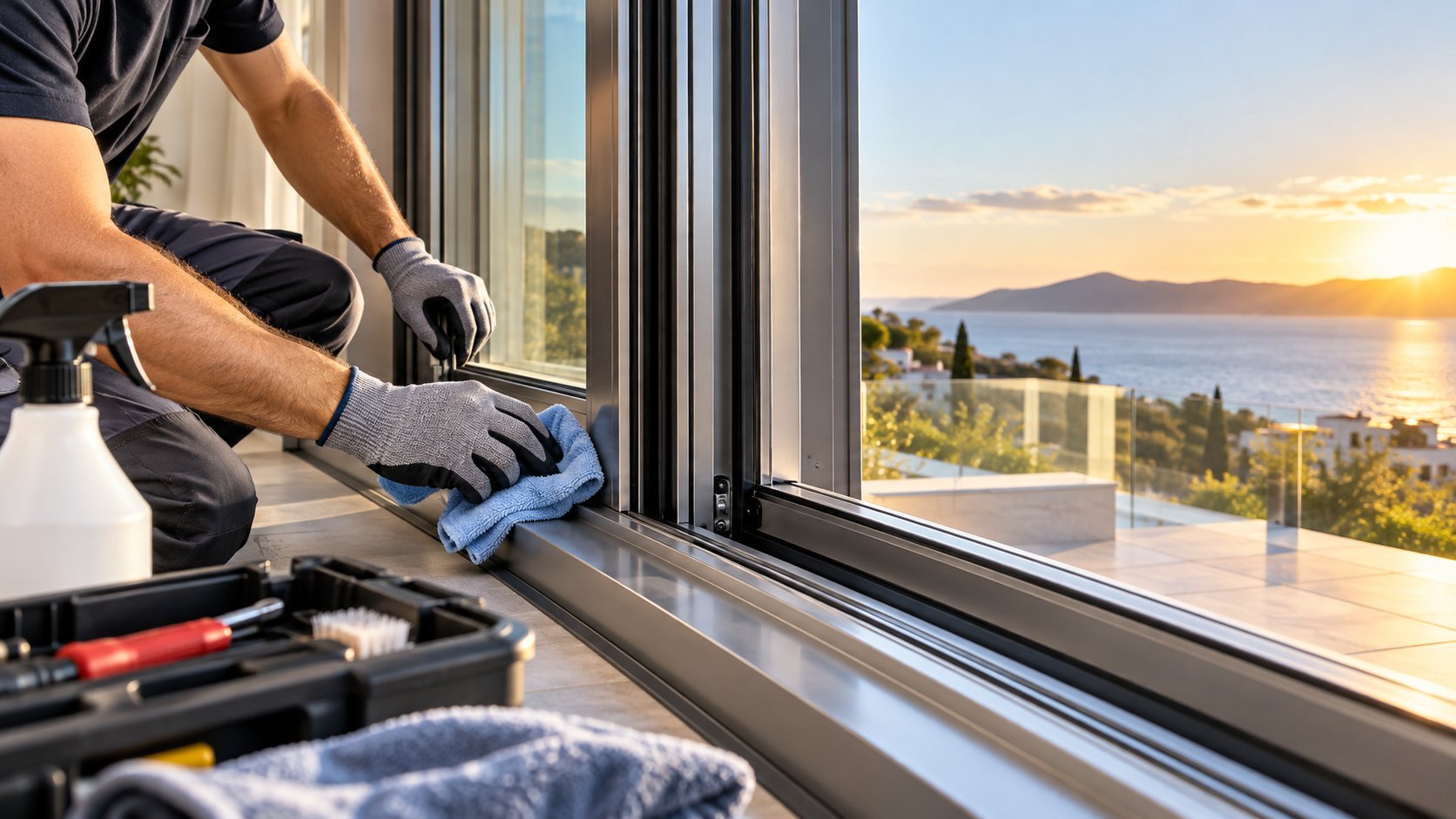
Maintenance costs vary too. Coastal installations may require more frequent cleaning and inspections, while sliding windows that see heavy daily use can need periodic attention to tracks, rollers, and seals.
Before committing, compare warranty coverage, exclusions, installation responsibilities, replacement-part availability, and performance documentation. A detailed quotation with clear specifications is far more useful than a low price with unanswered questions.
Final Checklist for Choosing the Right Aluminum System
Before ordering aluminum windows, doors, or an enclosure, work through these eight checks. They cover the practical questions that can easily get lost when you’re comparing designs and prices.
- Identify the climate and exposure. Look at seasonal temperatures, humidity, rainfall, wind, salt exposure, and solar orientation.
- Check thermal performance. Compare whole-window U-factor and SHGC ratings against your location’s requirements.
- Review the glazing. Consider Low-E coatings, insulated glazing configurations, and the amount of solar control needed.
- Verify weather resistance. Request relevant air leakage, water penetration, and wind performance documentation.
- Examine corrosion protection. Check frame finishes, hardware, fasteners, and recommended maintenance.
- Choose a suitable opening style. Think about ventilation, access, surrounding space, and how frequently the window or door will operate.
- Confirm code compliance. Account for structural, energy, safety glazing, and impact requirements where they apply.
- Compare lifetime value. Consider installation quality, maintenance, warranty coverage, and potential energy performance benefits.
If you’re deciding between two products, ask for their technical data sheets and compare the relevant ratings directly. One may offer better insulation while another has advantages in structural performance or weather resistance. The better choice is the one that matches your building’s priorities.
Find the Right Aluminum System for Your Project
Climate should shape your aluminum system specification from the beginning. A sun-exposed home in Arizona, a property on the Florida coast, and a building in the northern United States won’t necessarily benefit from the same frame, glazing, or weather-resistance features.
Explore the aluminum window and enclosure solutions available from TGP Systems to identify configurations worth considering for your project. When discussing your requirements with the team, provide the project location, approximate dimensions, preferred opening style, glazing needs, and relevant weather exposure.
Those details will help you narrow the options and determine which technical specifications need verification before requesting a final quotation.
Frequently Asked Questions
Are aluminum windows good for cold climates?
Yes, provided they’re designed for the conditions. Thermally broken aluminum frames, insulated glazing, and effective air seals can deliver suitable cold-climate performance. Conventional aluminum frames without thermal separation generally allow more heat transfer. Compare whole-window U-factor and condensation performance rather than judging the frame material alone.
What type of aluminum windows is best for hot climates?
Windows with appropriate solar-control glazing, suitable SHGC ratings, and good thermal performance are generally the strongest candidates. Thermally broken frames can also help limit heat transfer. Sliding and casement designs can both work well; the better choice depends on ventilation, available space, and the individual window’s tested performance.
Do aluminum windows corrode in coastal areas?
They can. Aluminum naturally resists corrosion, but salt deposits, persistent moisture, damaged finishes, and incompatible metals may cause deterioration. Suitable protective coatings, corrosion-resistant hardware, appropriate fasteners, and regular cleaning help reduce the risk.
Are thermally broken aluminum windows worth it?
Often, especially where insulation, comfort, or condensation control is a priority. A thermal break reduces heat transfer through the frame compared with a similar design without one. Whether the added cost pays off financially depends on the climate, energy prices, glazing package, and price difference between the products.
What is the best window U-factor for my climate?
There’s no single U-factor that suits every climate. Lower values are generally preferable in cold regions, while cooling-dominated areas also need careful attention to SHGC. Check current ENERGY STAR climate-zone criteria, applicable energy codes, and NFRC ratings to establish a suitable target for your project.
How long do aluminum windows last in harsh weather?
Well-designed aluminum windows can last for decades, although service life varies with exposure, finish quality, hardware, installation, and maintenance. Coastal conditions may accelerate wear on inadequately protected components. Cleaning, inspections, and timely repairs to seals or hardware can help extend their useful life.
Are aluminum windows better than vinyl windows in hot climates?
Not automatically. Aluminum provides strength and design flexibility, while vinyl has lower inherent thermal conductivity. A well-specified thermally broken aluminum window may outperform a poorly designed alternative. Compare whole-window energy ratings, structural needs, maintenance requirements, and price before choosing between the materials.
What is the difference between U-factor and SHGC?
U-factor measures how readily heat passes through a window assembly. SHGC measures how much solar heat enters through it. A lower U-factor generally means better insulation, while a lower SHGC reduces solar heat gain. Both are useful, but they describe different aspects of window performance.
Can aluminum sliding windows withstand strong winds?
Yes, some aluminum sliding windows are engineered and tested for substantial wind pressures. The actual rating depends on the model, dimensions, glazing, and installation. Check the documented design pressure and structural performance. Hurricane-prone areas may also require impact resistance or approved protective measures.
What window features help prevent condensation in winter?
Thermally broken frames, insulated glazing, warm-edge spacers, and effective seals can help keep interior window surfaces warmer. Indoor humidity control and ventilation matter too. Even a high-performance window can develop condensation when moisture levels are high or outdoor temperatures are extremely low.
Is double glazing or triple glazing better for cold climates?
Triple glazing can provide better insulation than comparable double glazing, but it’s heavier and generally costs more. High-performance double glazing may be sufficient for many buildings. The decision should account for whole-window U-factor, frame compatibility, condensation performance, and the building’s heating needs.
Do patio enclosures need different specifications in coastal climates?
Yes. Coastal enclosures may need additional corrosion protection, appropriate structural wind resistance, effective drainage, and hardware suited to salt exposure. Local building requirements also matter. Don’t assume a standard enclosure is suitable for hurricane conditions without relevant engineering and documented performance.
How often should aluminum windows be maintained near the ocean?
Follow the manufacturer’s recommendations and adjust cleaning frequency to the level of salt exposure. Coastal windows generally need more frequent attention than comparable inland installations. Freshwater cleaning and regular checks of tracks, drainage openings, seals, and hardware can help identify developing problems early.
Can aluminum windows improve home energy efficiency?
Yes. Replacing poorly performing windows with appropriately specified aluminum systems can improve energy efficiency. Thermal breaks, insulated glazing, suitable SHGC ratings, effective seals, and proper installation all contribute. Actual savings depend on the existing windows, climate, building characteristics, and heating or cooling equipment.
What should I ask an aluminum window supplier before buying?
Ask for whole-window thermal ratings, glazing specifications, air and water resistance results, structural performance documentation, finish details, warranty terms, and installation requirements. In demanding environments, also check corrosion protection, code compliance, and applicable approvals. Make sure the documents cover the configuration you’re actually purchasing.
Working on a window or enclosure project? Share your climate, design challenge, or preferred system in the comments. And if this guide helped clarify your options, feel free to pass it along to someone planning a similar project.


Leave a Reply
You must be logged in to post a comment.