
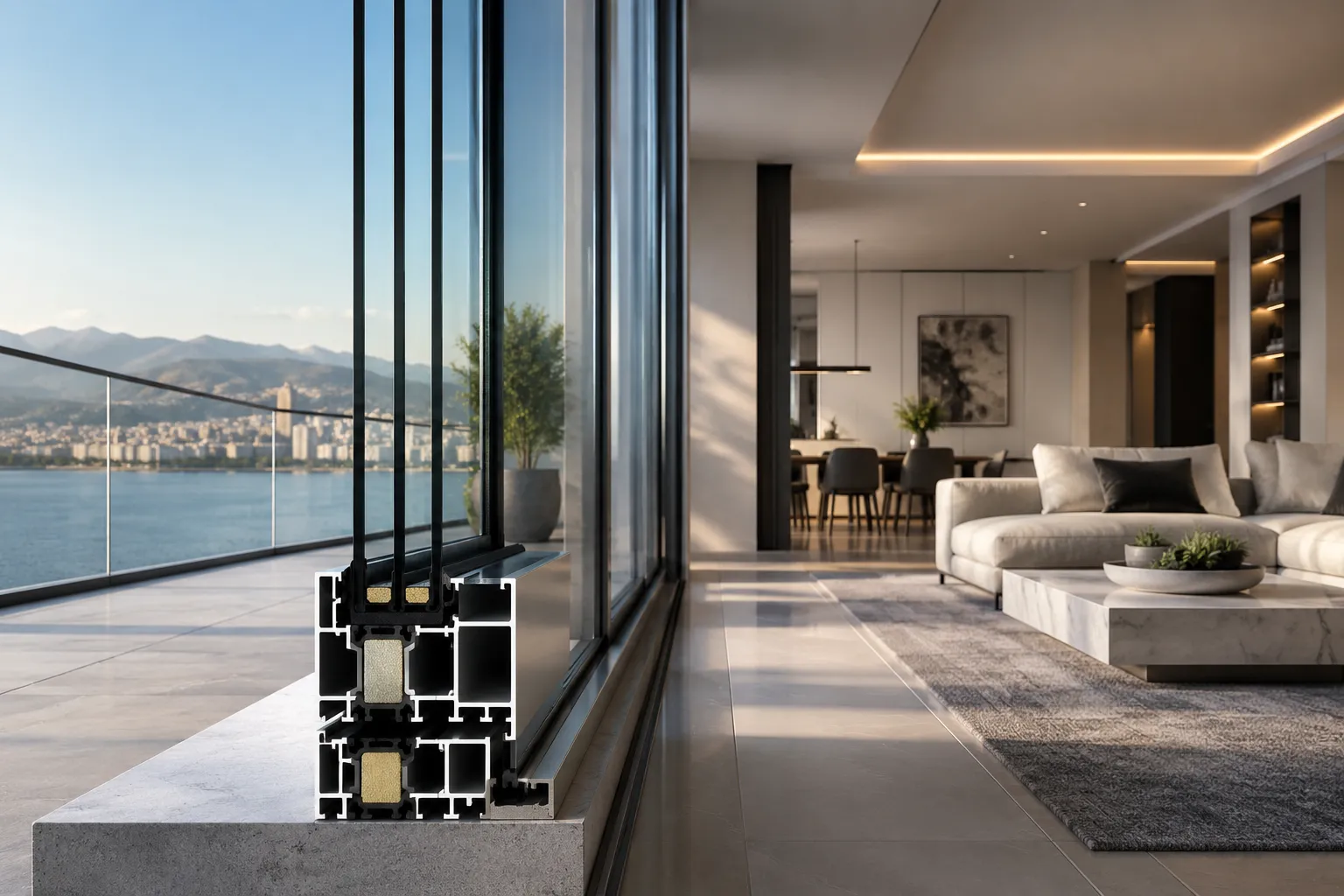
Thermal Break Aluminum Systems
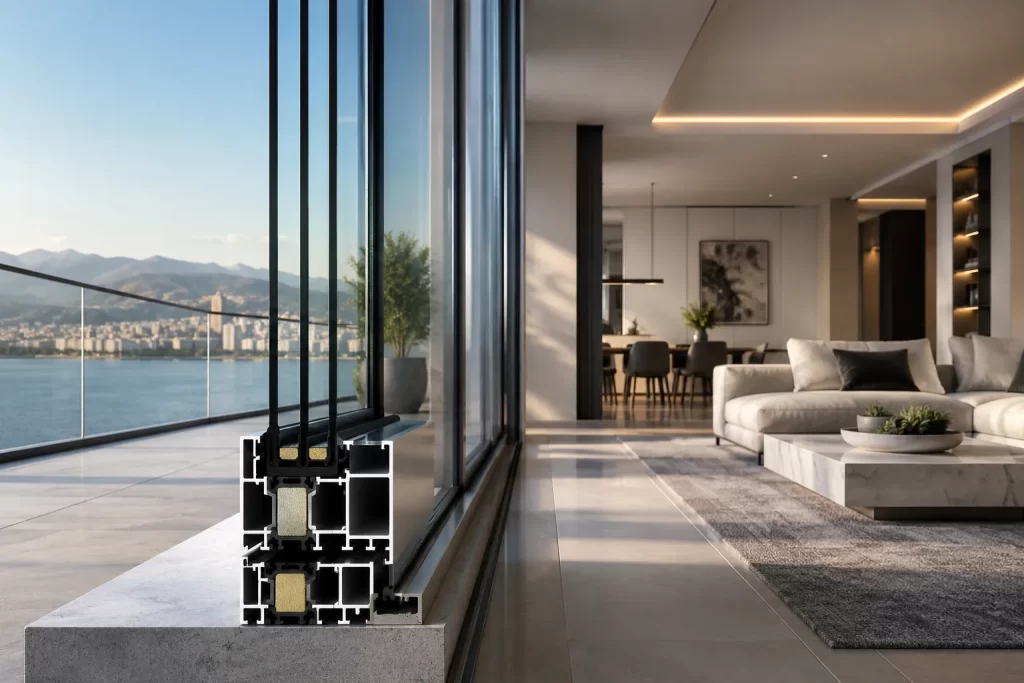
Thermal break aluminum systems are designed to improve the insulation, comfort and long-term performance of aluminum windows, doors and sliding systems. In simple terms, they help reduce heat transfer between the indoor and outdoor sides of an aluminum profile by using an insulating barrier inside the frame structure.
This matters because aluminum is strong, elegant and highly durable, but it is also a naturally conductive material. Without the right system design, heat and cold can move through the frame more easily. That is exactly where thermal break technology becomes important.
For homeowners, architects, contractors and project investors, the question is not only “Which window or door looks better?” anymore. Today, we all care about energy efficiency, condensation control, acoustic comfort, modern design and long-term value. In our view, thermal break aluminum systems bring these priorities together in a very practical way.
What Are Thermal Break Aluminum Systems?
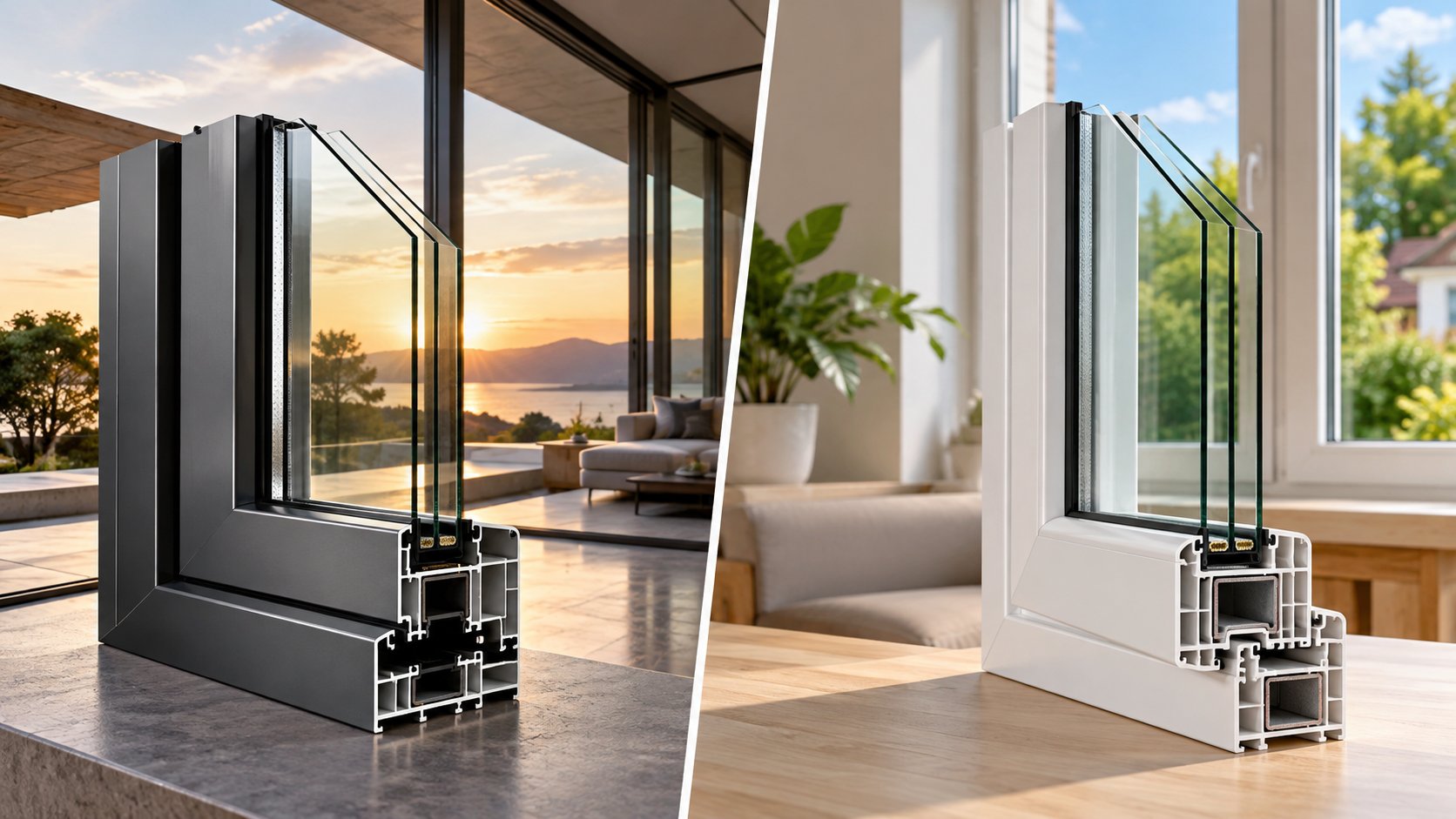
Thermal break aluminum systems are window, door or facade systems that include an insulating barrier between the inner and outer aluminum profiles. This barrier helps interrupt the thermal bridge inside the frame and reduces the direct transfer of heat or cold from one side to the other.
A standard aluminum frame can be very strong and visually clean, but if it does not include a thermal break, the frame may transfer outdoor temperature more quickly into the indoor environment. In cold weather, this can lead to colder interior surfaces. In warm climates, it can contribute to unwanted heat gain.
Thermally broken aluminum systems are developed to solve this issue while keeping the architectural advantages of aluminum. You still get slim profiles, large glass surfaces, structural strength and modern aesthetics, but with better insulation performance.
How the Thermal Break Barrier Works
The main idea is simple: separate the inner and outer aluminum parts of the frame with a low-conductivity insulating material. In many systems, this material is a polyamide strip or a similar insulating barrier placed between the inner and outer aluminum profile.
This barrier does not allow heat to travel through the frame as easily as it would in a continuous aluminum profile. So the system helps reduce heat transfer, improve frame performance and support more stable indoor comfort.
Of course, the frame is only one part of the story. Glass type, glazing quality, air leakage control, sealing details, hardware and professional installation also affect the final performance. A thermal break frame works best when it is part of a complete, well-designed window or door system.
Why Aluminum Needs Thermal Break Technology
Aluminum is widely used in modern architecture because it is lightweight, durable, recyclable, corrosion resistant and suitable for elegant profile designs. It also works beautifully with large glass openings, sliding systems, balconies, terraces and commercial building facades.
Still, aluminum has one technical challenge: conductivity. It can transfer temperature more readily than materials with naturally lower conductivity. This does not make aluminum a poor choice. On the contrary, it explains why high-performance aluminum systems often include thermal break technology.
With the right thermal break design, aluminum becomes more suitable for exterior windows, doors and sliding systems where insulation and comfort matter. This is one reason why thermal break aluminum windows and thermal break aluminum doors are often preferred in premium residential and commercial projects.
Key Benefits of Thermal Break Aluminum Systems
The benefits of thermal break aluminum systems are not limited to insulation. They also affect comfort, design freedom, condensation risk, noise control and long-term building value. Let’s look at the most important advantages in a practical way.
Better Thermal Insulation
The first and most obvious benefit is improved thermal insulation. The insulating barrier inside the aluminum profile helps reduce the thermal bridge between the outdoor and indoor sides of the frame.
This can make a noticeable difference in daily comfort. In winter, the interior side of the frame may feel less cold. In summer, the system may help limit unwanted heat gain when combined with suitable glazing and sealing details.
For homes, villas, apartments, hotels and offices, this is more than a technical feature. It affects how comfortable the interior feels near windows, balcony doors or large sliding glass openings.
Improved Energy Efficiency
Energy efficient aluminum systems are especially valuable in buildings where heating and cooling performance matters. Thermal break technology can support better energy performance by helping reduce heat loss and heat gain through the frame.
That said, we should be realistic. No frame alone can guarantee full energy efficiency. A high-performance system depends on several components working together:
- Thermally broken aluminum profiles
- Appropriate double glazing or insulated glass units
- Low-e glass when suitable for the project
- Quality sealing and gasket design
- Correct hardware selection
- Professional measurement and installation
When these elements are considered together, thermal break aluminum systems can become a strong choice for energy-conscious buildings.
Reduced Condensation Risk
Condensation is one of the common problems people notice around windows and doors. It usually appears when warm indoor air meets a cold surface and moisture in the air turns into water droplets.
Thermal break aluminum systems may help reduce condensation risk by improving the interior surface temperature of the frame. If the inner side of the frame stays warmer, the chance of moisture forming on that surface can decrease.
This does not mean condensation can be completely prevented in every condition. Indoor humidity, ventilation, glass performance and outdoor temperature all play a role. Still, a thermally broken frame is generally a more suitable option when condensation control is an important concern.
Enhanced Acoustic Comfort
Noise reduction is another reason many users prefer high performance aluminum systems. The thermal break itself is not the only factor in sound control, but a well-designed system with proper glazing and sealing can contribute to a quieter indoor environment.
This can be especially useful in urban apartments, roadside homes, hotels, offices, restaurants and commercial spaces. Anyone who has tried to relax in a room facing traffic knows how valuable acoustic comfort can be.
For best results, the thermal break frame should be combined with suitable glass thickness, laminated glass options where needed, tight sealing and correct installation.
Modern Design with Long-Term Durability
One reason aluminum remains popular in architecture is its clean visual language. It supports slim profiles, minimalist lines and large glass surfaces. Thermal break aluminum systems preserve this design advantage while adding better thermal performance.
In modern homes, this combination is quite powerful. You can create brighter living rooms, wider terrace transitions, elegant balcony systems and spacious interiors without giving up durability.
Aluminum also performs well in demanding conditions when the right coating, profile quality and system design are selected. For coastal areas, hotels, commercial properties and frequently used doors, long-term durability is a serious advantage.
Thermal Break vs Non-Thermal Break Aluminum Systems
The difference between thermal break and non-thermal break aluminum systems is mainly about insulation and comfort. Non-thermal break aluminum systems may still be useful in certain interior or low-insulation applications. However, for exterior windows, doors and high-comfort projects, thermally broken systems are generally the stronger option.
Performance Differences
| Feature | Thermal Break Aluminum | Non-Thermal Break Aluminum |
|---|---|---|
| Thermal Insulation | Higher performance due to an insulating barrier | Lower thermal resistance because the profile is more conductive |
| Condensation Control | Helps reduce condensation risk by improving inner surface temperature | More prone to cold surface issues in certain conditions |
| Energy Efficiency | More suitable for energy-conscious buildings | Less suitable for high-performance exterior applications |
| Indoor Comfort | Supports more stable comfort near windows and doors | May allow more heat or cold transfer through the frame |
| Best Use | Exterior windows, doors, sliding systems and premium projects | Interior areas or projects with low insulation requirements |
In short, non-thermal break systems may be enough for some interior partitions or simple applications. But when the system faces outdoor climate, temperature changes, humidity or high comfort expectations, thermal break aluminum is usually the more sensible choice.
When Non-Thermal Break Aluminum May Not Be Enough
Non-thermal break aluminum may not be enough for villas, exterior balcony doors, terrace openings, hotels, coastal properties or buildings where heating and cooling costs are an important concern.
It may also fall short in projects where occupants spend time close to large windows or sliding doors. A beautiful glass opening can lose its charm if the area around it feels cold in winter or overheated in summer.
For this reason, architects and property owners often prefer thermally broken aluminum systems for residential projects, commercial buildings, hospitality spaces, patio enclosures and modern facade applications.
Where Are Thermal Break Aluminum Systems Used?
Thermal break aluminum systems can be used in many types of projects. They are especially valuable wherever exterior openings must combine design, insulation, durability and user comfort.
Residential Windows and Doors
In homes, apartments and villas, thermal break aluminum windows and doors can improve comfort in living rooms, bedrooms, kitchens, balconies and terrace areas. They are particularly useful where large glass surfaces are part of the design.
Modern residential architecture often aims for more daylight, better views and smoother transitions between indoor and outdoor spaces. Aluminum makes this possible with strong and elegant profiles, while thermal break technology supports insulation performance.
For projects that require stylish and functional window solutions, aluminum sliding window systems can be considered as part of a broader design strategy for bright, practical and modern living spaces.
Sliding and Lift-and-Slide Systems
Sliding systems are one of the most common areas where thermal break aluminum becomes valuable. Large glass panels, terrace connections and garden-facing openings need both smooth movement and strong frame performance.
In many modern homes, the sliding door is not just a door. It is part of the view, part of the room and sometimes the main architectural feature of the space. Because of that, insulation, sealing, profile strength and hardware quality should be evaluated together.
For wide openings and comfortable transitions between interior and exterior areas, lift and slide systems can offer a refined solution when the project requires large glass surfaces, practical use and modern aluminum design.
Commercial and Hospitality Projects
Hotels, offices, restaurants, showrooms and commercial buildings often need systems that look elegant and perform reliably under daily use. Thermal break aluminum systems fit this expectation well because they combine durability with a premium appearance.
In hospitality projects, comfort is not a small detail. Guests notice room temperature, noise, drafts and condensation even if they do not know the technical reason behind them. A well-selected aluminum system can support a more pleasant guest experience.
In commercial spaces, thermal break aluminum systems can also contribute to a stronger architectural identity. Clean lines, large glass openings and durable frames help create interiors that feel open, professional and valuable.
How to Choose the Right Thermal Break Aluminum System
Choosing the right system is not only about selecting “thermal break” as a feature. The total performance depends on frame design, glass, sealing, hardware, installation and project conditions. A careful evaluation at the beginning can prevent many problems later.
Check Frame Design and Profile Quality
The aluminum profile should be suitable for the size, weight and function of the window or door. Large sliding doors, for example, need stronger system engineering than a small fixed window.
Profile depth, thermal barrier quality, structural stability, coating durability and compatibility with glass units should all be reviewed. A system may look similar from the outside, but its internal design can make a real difference in long-term performance.
We believe this is one of the areas where working with a quality-focused supplier matters. The right product range makes it easier to match the system with the project’s climate, usage and design needs.
Consider Glass and Glazing Performance
Glass is a major part of every window and door system. Even the best thermal break frame cannot perform properly if the glazing is weak or unsuitable for the project.
Depending on the building, users may need double glazing, insulated glass units, low-e glass, laminated glass or solar control glass. These choices can affect insulation, sound control, safety, daylight and indoor comfort.
For example, a villa with large south-facing openings may need a different glazing strategy than a city apartment exposed to traffic noise. This is why system selection should be project-based, not generic.
Evaluate Sealing, Hardware and Installation
Sealing quality has a direct impact on air leakage, water tightness and acoustic comfort. Hardware affects how smoothly the system operates and how well it closes over time. Installation determines whether the system performs as designed.
In other words, thermal break technology is important, but it should not be treated as a single magic feature. The complete system must work together.
Before making a decision, it is useful to ask these questions:
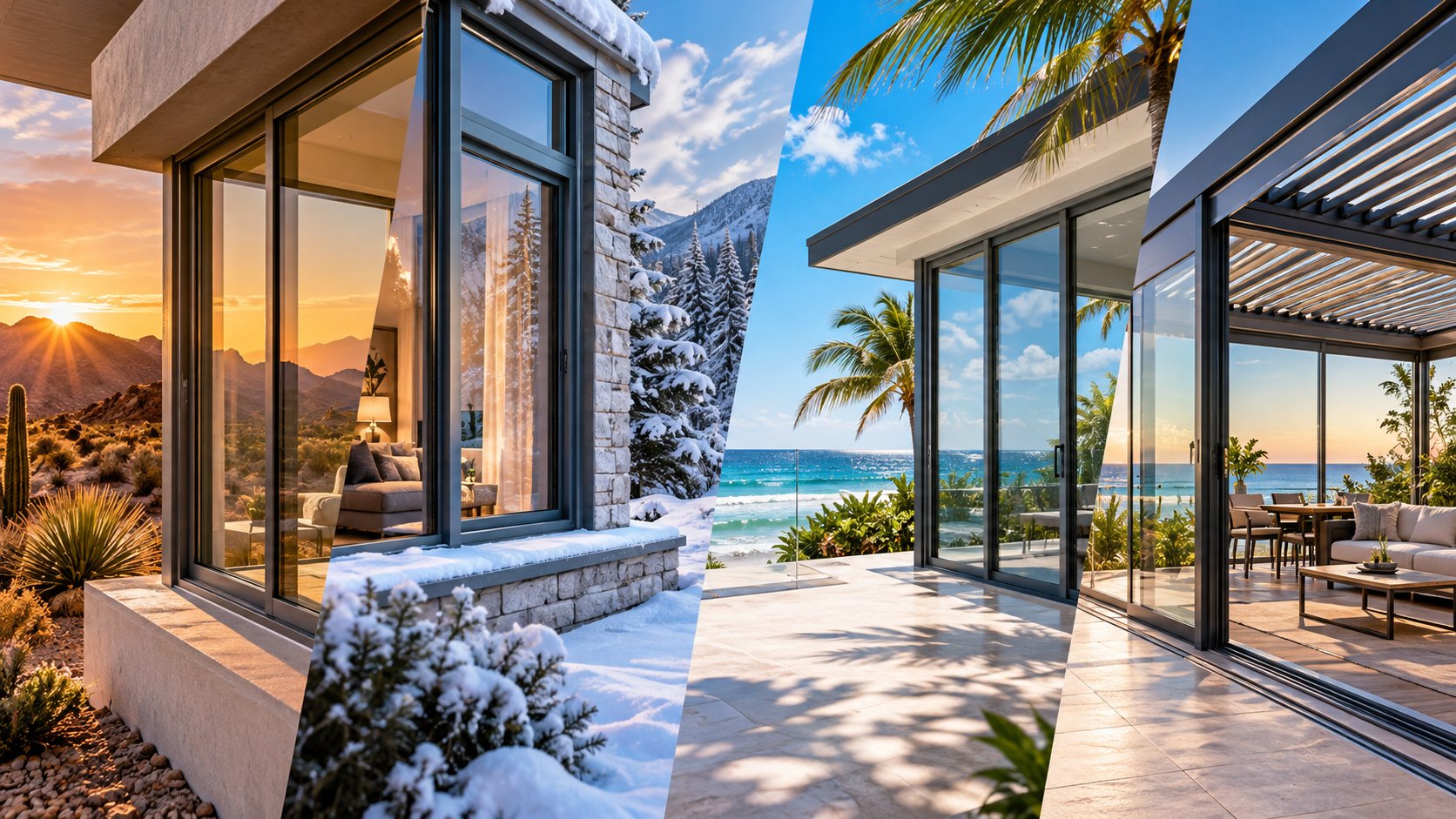
- Is the frame suitable for the local climate?
- Is the glazing appropriate for insulation and noise control?
- Are the seals and gaskets designed for long-term performance?
- Is the hardware strong enough for the system size?
- Will the installation be handled with correct measurement and detailing?
These questions may sound technical, but they are very practical. They help you avoid choosing a system only by appearance or price.
Why Choose TGP Systems for Aluminum Systems?
TGP Systems stands out as a modern aluminum and glass systems provider with a product approach focused on quality, durability, design and practical project needs. For users comparing aluminum window systems, aluminum door systems, sliding solutions or enclosure systems, this balance can be highly valuable.
Quality-Oriented Product Range
TGP Systems offers solutions across aluminum, glass, sliding and architectural enclosure systems. This product diversity helps customers evaluate their project more holistically instead of looking at each opening as a separate problem.
From windows and doors to balcony, patio and sliding systems, the brand’s range supports modern living spaces that require both function and visual refinement.
Strong Balance of Design, Durability and Price
Not every project needs the most expensive system, but every project deserves the right system. That is an important difference. TGP Systems positions its solutions around a strong balance of premium appearance, durable system infrastructure and accessible value.
This kind of price-performance balance is especially meaningful for residential developers, hotel investors, villa owners and commercial property managers who need long-term usability without losing design quality.
Solutions for Modern Living Spaces
Modern architecture often asks for more than standard windows and doors. It asks for wider views, cleaner transitions, more daylight, better comfort and materials that can handle daily life for many years.
TGP Systems supports this direction with aluminum systems, sliding systems, balcony solutions, patio enclosures and glass-focused architectural products. The result is a practical product ecosystem for contemporary homes and commercial spaces.
Final Thoughts: Are Thermal Break Aluminum Systems Worth It?
Thermal break aluminum systems are worth considering when a project requires comfort, insulation, durability and a modern architectural appearance. They help reduce heat transfer through aluminum frames and can support better energy performance when combined with proper glazing, sealing and installation.
They are especially suitable for exterior windows, doors, sliding systems, large glass openings, villas, apartments, hotels, offices and commercial buildings. In projects where indoor comfort and long-term value matter, thermally broken aluminum systems usually offer a smarter solution than standard non-thermal break alternatives.
If you are planning a project that requires comfort, durability and modern aluminum design, TGP Systems can help you explore suitable window, door and sliding system solutions for your space.
Have a project in mind or comparing different aluminum system options? Share your thoughts, ask your questions and take the next step toward choosing a system that truly fits your building.
Frequently Asked Questions About Thermal Break Aluminum Systems
What is a thermal break aluminum system?
A thermal break aluminum system is a window, door or sliding system that includes an insulating barrier between the inner and outer aluminum profiles. This barrier helps reduce heat transfer through the frame and supports better thermal insulation.
Are thermal break aluminum systems energy efficient?
Yes, thermal break aluminum systems can support energy efficiency when they are combined with suitable glazing, sealing, hardware and professional installation. The complete system design is important for real performance.
What is the difference between thermal break and regular aluminum?
Regular aluminum systems may allow more direct heat transfer through the profile. Thermal break aluminum systems include an insulating barrier that interrupts this transfer and improves comfort, insulation and condensation control.
Do thermal break aluminum systems prevent condensation?
They do not guarantee complete condensation prevention in every condition, but they may help reduce condensation risk by improving the interior surface temperature of the frame. Indoor humidity and ventilation also matter.
Are thermal break aluminum systems good for sliding doors?
Yes, they are often a strong choice for sliding doors, especially in wide openings, terrace transitions and modern living spaces. The right glass, sealing and hardware should be selected together with the frame system.
Where can thermal break aluminum systems be used?
They can be used in homes, villas, apartments, offices, hotels, restaurants, balconies, patios, terraces, commercial buildings and other exterior applications where insulation and durability are important.
Are thermal break aluminum systems worth the investment?
For many projects, yes. They can offer long-term value through better comfort, improved insulation, modern design, durability and more suitable performance for exterior windows and doors.
Why is aluminum used in modern window and door systems?
Aluminum is strong, lightweight, durable and visually elegant. It allows slim profiles and large glass surfaces, making it highly suitable for modern architecture and premium building designs.
What should I check before choosing a thermal break aluminum window?
You should check the frame design, thermal barrier quality, glass type, sealing system, hardware strength, installation quality and suitability for your climate and project conditions.
Can thermal break aluminum systems reduce outside noise?
They can contribute to acoustic comfort when combined with suitable glazing and proper sealing. For stronger noise reduction, laminated glass and high-quality installation may also be needed.
Are thermal break aluminum doors suitable for commercial buildings?
Yes, thermal break aluminum doors can be suitable for offices, hotels, showrooms, restaurants and commercial properties. They offer a combination of durability, modern appearance and improved comfort.
Why choose TGP Systems for aluminum and glass systems?
TGP Systems offers quality-focused aluminum, glass, sliding and enclosure solutions for modern architectural projects. The brand combines design, durability, functionality and a strong price-performance balance for different project needs.


Leave a Reply
You must be logged in to post a comment.