
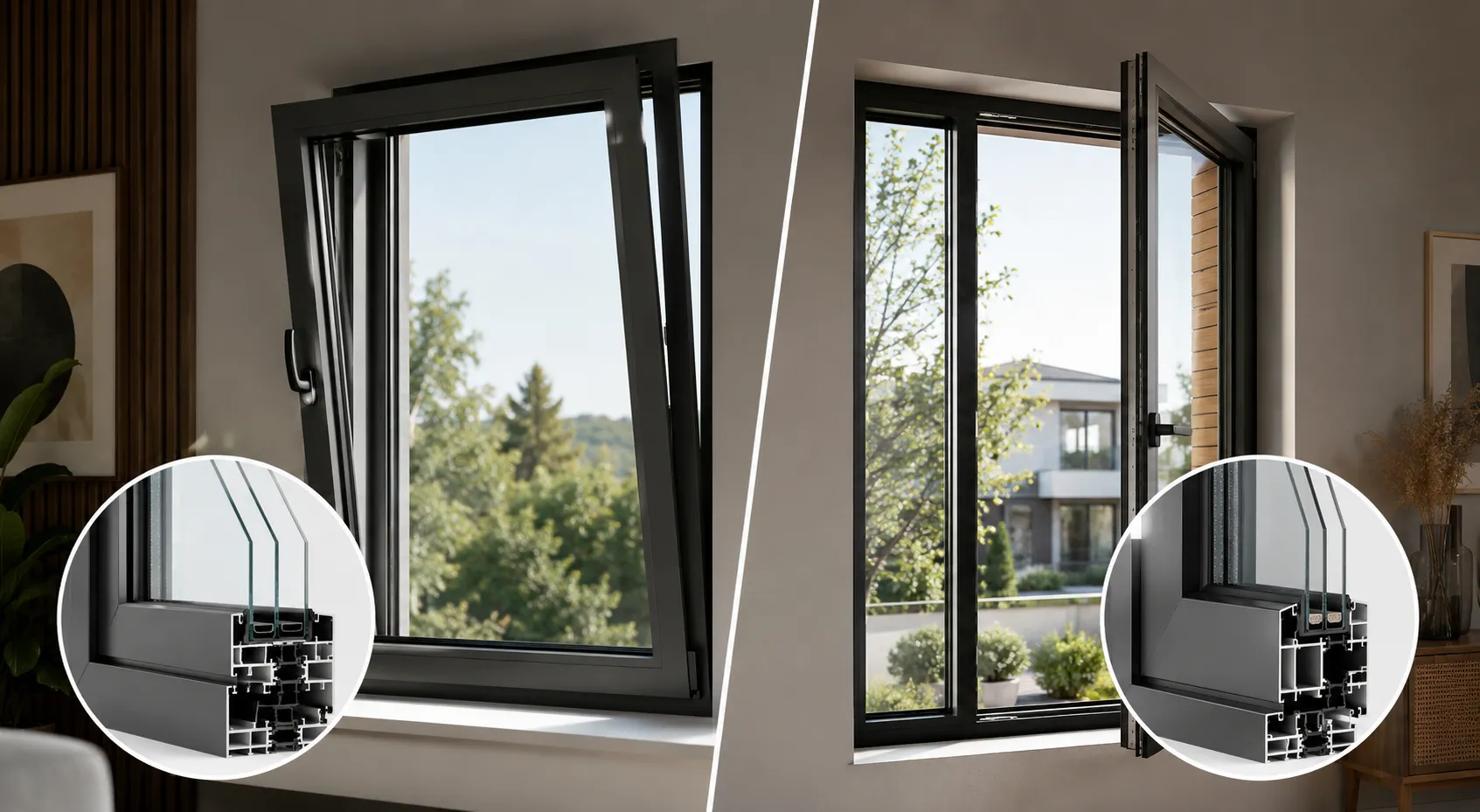
Casement vs Tilt & Turn Windows
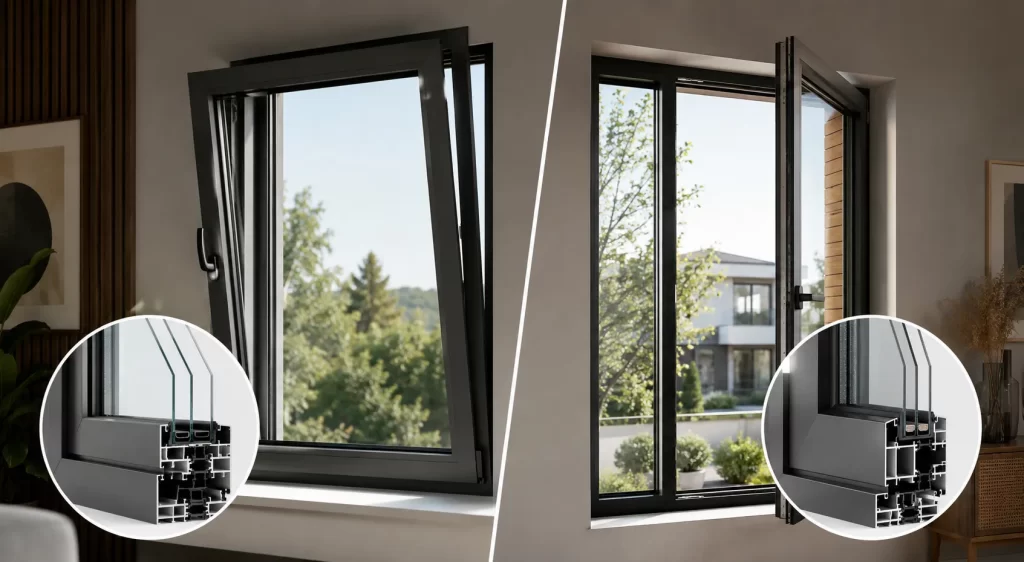
Choosing between casement windows vs tilt and turn windows is not only a matter of style. It is a decision that affects ventilation, insulation, security, cleaning comfort, daily usability and even the long-term value of a building. For homeowners, architects, contractors and project investors, the right window system can quietly improve the entire living experience.
Both casement windows and tilt and turn windows are widely used in modern residential and commercial projects. At first glance, they may look similar because both can offer clean lines, strong sealing and elegant frame designs. Yet their opening mechanisms, practical advantages and best-use scenarios are quite different.
So, which one is better? Honestly, there is no single answer for every project. A compact apartment, a coastal villa, a hotel room and a commercial office may all require different window priorities. In this guide, we will compare both systems in detail and help you understand which option fits your project more naturally.
What Are Casement Windows?
Casement windows are hinged window systems that usually open outward or inward from the side. They are one of the most familiar window types in residential architecture and are preferred for their simple operation, wide opening capacity and strong sealing performance.
In many projects, casement windows are chosen because they provide a full opening. When opened completely, the sash moves away from the frame and allows fresh air to enter generously. This makes them especially useful in spaces where effective ventilation is important, such as living rooms, kitchens, bedrooms and garden-facing areas.
How Casement Windows Open and Operate
A casement window typically works with hinges placed on one side of the frame. Depending on the design, the sash can be opened manually with a handle or operated with specific window hardware. In outward-opening designs, the sash moves outside the building facade, which can be practical for interiors where you want to save usable space.
For projects that need a simple, practical and elegant window solution, outward opening casement window systems can be a strong option. They are particularly suitable when the aim is to combine clear opening performance with a refined architectural appearance.
Main Advantages of Casement Windows
One of the biggest advantages of casement windows is airflow. Because the sash opens widely, air can move into the room more directly. This may feel especially valuable in warmer climates or in homes where natural ventilation is preferred over constant mechanical cooling.
Casement windows also perform well in terms of sealing. When closed properly, the sash presses firmly against the frame, helping to reduce air leakage and improve comfort. For homeowners who care about energy efficiency, this is an important point.
Another advantage is their straightforward structure. Casement windows are easy to understand, easy to use and often suitable for a wide range of architectural styles. From traditional homes to contemporary villas, they can adapt without looking out of place.
What Are Tilt & Turn Windows?
Tilt and turn windows are dual-function window systems that can open in two different ways. In the tilt position, the top of the sash leans inward slightly, creating controlled ventilation. In the turn position, the sash opens inward like a casement window, allowing wider access for cleaning, airflow or emergency use.
This flexibility is the main reason tilt and turn windows have become popular in modern buildings. They are often associated with European-style window systems and are preferred in projects where comfort, safety and advanced functionality are important.
How Tilt & Turn Window Mechanisms Work
The key difference lies in the window opening mechanism. A tilt and turn window uses a more advanced hardware system that allows the handle to control two separate opening modes. With one handle position, the sash tilts inward from the top. With another position, it turns inward from the side.
This design gives users more control over ventilation. For example, you can keep the window tilted for gentle airflow without fully opening the sash. This is useful in bedrooms, hotel rooms, offices and upper-floor spaces where safety and controlled ventilation matter.
Why Tilt & Turn Windows Are Popular in Modern Buildings
Tilt and turn windows are popular because they solve several everyday problems at once. They allow fresh air without creating a large opening. They make cleaning easier from the inside. They also support strong sealing and security when designed with quality materials and reliable hardware.
In modern architectural projects, this kind of multifunctional design is highly valued. People expect windows to do more than open and close. They want comfort, safety, silence, thermal insulation and visual harmony. Tilt and turn systems respond well to that expectation.
Casement Windows vs Tilt & Turn Windows: Key Differences
When comparing casement windows vs tilt and turn windows, it helps to look beyond appearance. The real difference is how each system behaves in daily use. A window that looks perfect on paper may not be ideal if it conflicts with furniture placement, cleaning access or ventilation needs.
Opening Style and Functionality
Casement windows usually offer one main opening function. They open from the side and create a wide gap for air and access. This simplicity can be a strength because the system is easy to use and familiar to most people.
Tilt and turn windows, on the other hand, offer two functions in one system. The tilt mode is ideal for everyday ventilation, while the turn mode is useful for full opening and cleaning. If your project requires flexibility, tilt and turn windows may feel more practical in the long run.
Ventilation Performance
Casement windows are excellent for strong ventilation. When opened fully, they can capture and direct airflow into the room. This can be a real advantage in warm regions, garden-facing homes or areas where natural air circulation is a priority.
Tilt and turn windows offer more controlled ventilation. The tilt position allows air to enter gradually from the top, reducing drafts and improving comfort. For bedrooms, offices and hotel rooms, this gentle airflow can be more comfortable than a fully opened sash.
Energy Efficiency and Insulation
Both systems can deliver strong thermal insulation when manufactured with quality profiles, proper glazing and airtight sealing. The frame system, glass selection and installation quality are just as important as the window type itself.
Casement windows generally seal well because the sash closes tightly against the frame. Tilt and turn windows can also provide excellent insulation, particularly when supported by precise hardware and multi-point locking systems.
For energy efficient windows, the real question should be this: Is the full system designed and installed correctly? A high-quality window with poor installation may underperform, while a well-engineered system can support comfort, lower energy loss and long-term durability.
Security and Safety
Security depends heavily on the hardware, locking points, frame strength and glass specification. Casement windows can be secure when fitted with reliable locking systems. However, tilt and turn windows often have an advantage because many designs include multi-point locking around the sash.
The tilt function also adds a layer of practical safety. You can ventilate the room without leaving the window fully open. For upper floors, children’s rooms, hotels and urban apartments, this can be a meaningful benefit.
High-quality window security is closely connected to the reliability of the fittings. That is why project owners should pay attention to modern window and door hardware solutions when comparing different window systems.
Cleaning and Maintenance
Cleaning is one of those details people sometimes underestimate during the decision stage. But once the building is in use, it becomes very important. Casement windows may be easy to clean from inside if they open inward, but outward-opening models can be harder to access from upper floors.
Tilt and turn windows are often easier to clean because the sash can turn inward. This allows users to reach the exterior glass surface from inside the room. For apartments, hotels and multi-storey buildings, this is a very practical advantage.
Maintenance for both systems should be simple when quality components are used. Periodic checks, gentle cleaning, lubrication of moving parts and correct use of handles can help extend the lifespan of the window system.
Design Flexibility
Casement windows offer a clean and timeless appearance. They can work beautifully in traditional homes, modern residences, villas and commercial buildings. Their wide opening also makes them attractive for spaces connected to gardens, balconies or terraces.
Tilt and turn windows are especially suitable for contemporary projects where performance and minimalist design are expected together. They integrate well with aluminum frames, large glass surfaces and modern facade concepts.
| Comparison Point | Casement Windows | Tilt & Turn Windows |
|---|---|---|
| Opening Function | Single side-opening function | Dual tilt and turn function |
| Ventilation | Strong and direct airflow | Controlled and gentle airflow |
| Cleaning | Depends on opening direction | Usually easier from inside |
| Security | Good with quality locks | Often stronger with multi-point locking |
| Best Use | Homes, villas, garden-facing rooms | Apartments, hotels, offices, modern buildings |
Which Window Type Is Better for Your Project?
The better choice depends on how the space will be used. We think this is where many buyers make a mistake: they compare windows only by price or appearance. In reality, the best window type for homes or commercial buildings should be selected according to lifestyle, climate, building height, maintenance access and design goals.
Best Option for Residential Buildings
For standard residential windows, casement systems are often a practical and cost-effective choice. They provide wide opening, good sealing and a familiar user experience. If the home has easy exterior access, cleaning is usually not a serious issue.
Tilt and turn windows may be better for apartments or compact homes where controlled ventilation and interior cleaning are important. For families who want to ventilate rooms safely without fully opening the window, the tilt function is a strong advantage.
Best Option for Villas and Luxury Homes
In villas and luxury homes, both systems can work well. Casement windows are ideal for rooms that open toward gardens, terraces or scenic views. Their wide opening can create a pleasant connection between indoor and outdoor living.
Tilt and turn windows, however, may be preferred in bedrooms, upper floors and areas where comfort and secure ventilation are priorities. In high-end projects, combining both systems in different parts of the building can sometimes be the smartest solution.
Best Option for Commercial Projects
For commercial window systems, durability, safety and ease of maintenance become more important. Tilt and turn windows are often suitable for offices, hotels and mixed-use buildings because they provide controlled airflow and easier cleaning from the inside.
Casement windows can still be effective in low-rise commercial spaces, boutique buildings or areas where larger openings are desired. The final decision should be made according to facade design, operational needs and long-term maintenance planning.
Pros and Cons of Casement Windows
Casement windows have many strengths, but they are not perfect for every project. Their biggest advantage is the ability to open widely and provide strong ventilation. They also offer good sealing performance when closed correctly.
- They provide generous airflow when fully opened.
- They can support good thermal insulation and weather resistance.
- They are simple to operate and widely understood by users.
- They work well in many residential and villa projects.
- They may be more difficult to clean from inside if they open outward on upper floors.
- They require enough exterior or interior clearance depending on the opening direction.
For homeowners who want a straightforward, elegant and effective solution, casement windows remain a reliable choice. Still, their suitability should be evaluated according to the location of the window and the practical needs of the space.
Pros and Cons of Tilt & Turn Windows
Tilt and turn windows stand out with their flexibility. The dual opening mechanism makes daily use more comfortable, especially in modern buildings where ventilation control, safety and cleaning access matter.
- They offer both tilt ventilation and full inward opening.
- They are convenient for cleaning from inside the room.
- They can provide strong security with quality multi-point hardware.
- They are suitable for apartments, hotels, offices and contemporary homes.
- They may require a higher initial investment than basic casement systems.
- They need precise hardware quality and proper installation to perform well.
In our view, tilt and turn windows are especially valuable when the project demands more than basic opening. If comfort, controlled ventilation and easy maintenance are high priorities, they deserve serious consideration.
Cost, Quality and Long-Term Value Comparison
Cost is always part of the decision, but it should not be the only factor. A cheaper window system may seem attractive at the beginning, yet poor sealing, weak hardware or difficult maintenance can create higher costs over time.
Casement windows may offer a more accessible starting point depending on the frame material, glass type and hardware specification. They can deliver excellent value when the project requires a durable and practical window solution without complex functionality.
Tilt and turn windows may cost more initially because of their advanced mechanism. However, their long-term value can be strong in projects where cleaning convenience, safety, flexible ventilation and insulation performance are important.
For long-term performance, pay attention to four elements: frame quality, glass specification, sealing details and hardware reliability. A window is not just a frame with glass; it is a complete system that should work smoothly for years.
Why Choose TGP Systems for Modern Window Solutions?
TGP Systems offers modern architectural systems for residential, villa, hotel, commercial and outdoor living projects. The brand’s approach focuses on combining durability, aesthetic balance and functional performance rather than treating windows as simple building components.
For projects that require reliable aluminum window systems, TGP Systems can help evaluate the right solution according to design expectations, insulation needs, ventilation requirements and long-term use. This project-based perspective is important because every building has its own priorities.
Whether the goal is to create a refined villa facade, improve comfort in a residential project or select durable systems for commercial use, TGP Systems provides window and door solutions designed to support modern architecture with practical performance.
Final Verdict: Casement or Tilt & Turn Windows?
When deciding between casement windows vs tilt and turn windows, the best answer depends on your project. Casement windows are a strong choice if you want wide opening, direct ventilation, simple operation and a familiar window style. They are practical, elegant and effective in many homes and villa projects.
Tilt and turn windows are often better if you value controlled ventilation, easier cleaning, advanced functionality and enhanced safety. They are particularly useful in apartments, hotels, offices and modern architectural projects where daily comfort matters as much as appearance.
If you are planning a residential, commercial or architectural project and want to choose the most suitable window system, TGP Systems can help you evaluate design expectations, insulation needs, ventilation requirements and long-term performance goals. Contact TGP Systems to explore high-quality window solutions tailored to your project.
Frequently Asked Questions
What is the main difference between casement and tilt & turn windows?
The main difference is the opening mechanism. Casement windows usually open from the side with one main function, while tilt and turn windows offer two functions: a tilted position for ventilation and a full inward opening position.
Are tilt & turn windows better than casement windows?
Tilt and turn windows are better for projects that need controlled ventilation, easy interior cleaning and advanced functionality. Casement windows may be better when wide opening, simplicity and direct airflow are the main priorities.
Which window type offers better ventilation?
Casement windows usually provide stronger and more direct airflow when fully opened. Tilt and turn windows offer more controlled ventilation, which can be more comfortable for bedrooms, offices and upper-floor spaces.
Are casement windows energy efficient?
Yes, casement windows can be energy efficient when they are designed with quality frames, proper glazing and airtight sealing. Installation quality also plays a major role in insulation performance.
Are tilt & turn windows more secure?
Tilt and turn windows can be highly secure, especially when they include multi-point locking systems and strong hardware. Their tilt position also allows ventilation without leaving the window fully open.
Which window type is easier to clean?
Tilt and turn windows are generally easier to clean from inside because the sash can open inward. This is especially useful for apartments, hotels and multi-storey buildings.
Are casement windows suitable for modern homes?
Yes, casement windows can be suitable for modern homes when designed with clean profiles, quality materials and the right frame system. They can work well in both minimalist and more traditional architectural styles.
Which window system is better for villas?
For villas, both systems can be suitable. Casement windows are excellent for garden-facing rooms and wide openings, while tilt and turn windows are useful for bedrooms, upper floors and spaces requiring controlled ventilation.
Do tilt & turn windows cost more than casement windows?
In many cases, tilt and turn windows may cost more because they use a more advanced mechanism. However, the final price depends on frame material, glass type, hardware quality, dimensions and project requirements.
How do I choose the right window system for my project?
Start by evaluating ventilation needs, cleaning access, security expectations, climate conditions, design style and budget. If you are unsure, working with an experienced window system provider can help you choose a solution that fits your project more accurately.
Are tilt & turn windows suitable for commercial buildings?
Yes, tilt and turn windows are often suitable for commercial buildings because they offer controlled airflow, easy maintenance and strong security potential. They are commonly preferred in offices, hotels and modern mixed-use projects.
Can casement and tilt & turn windows be used in the same project?
Yes, and in many cases this can be a smart approach. A project may use casement windows in areas that need wide opening and tilt and turn windows in rooms where safety, cleaning and controlled ventilation are more important.
If this guide helped you compare your options, share it with your project team or leave a note for your next window system decision. The right choice becomes much easier when design, comfort and long-term performance are considered together.


Leave a Reply
You must be logged in to post a comment.