
Lift & Slide Systems vs Standard Sliding Systems
Lift & Slide Systems vs Standard Sliding Systems

Lift & slide and standard sliding systems may look similar at first glance, yet their structural logic, performance levels, and user experience differ in ways that directly impact comfort, insulation, and architectural freedom.
When clients ask me whether they should choose a lift and slide system or a standard sliding door, I usually respond with another question: What kind of space are you really trying to create? Because in my experience, this decision is rarely just about a door. It is about how your interior connects to the outside world, how much glass you want to move effortlessly, and how far you are willing to go in terms of thermal and structural performance.
In this comprehensive guide, we will explore lift and slide systems and standard sliding systems from a structural, mechanical, architectural, and user-focused perspective. If you are researching large aluminum sliding doors, patio enclosures, terrace glazing, or high-performance façade solutions, you will find all the answers you need right here.
Understanding the Core Difference
At a basic level, both systems operate horizontally along a track. However, the mechanism that drives their movement is fundamentally different.
What Is a Lift & Slide System?
A lift and slide system works with a specialized hardware mechanism. When you turn the handle, the sash slightly lifts off its gaskets. This reduces friction, allowing even very large and heavy panels to glide smoothly along the track. Once the handle is locked back down, the sash lowers and compresses tightly against the seals.
This lifting action is not a small detail. It is the reason why lift and slide doors can carry panels weighing hundreds of kilograms without sacrificing ease of operation. In high-end residential projects and luxury commercial spaces, this system is often the preferred solution for wide openings.
What Is a Standard Sliding System?
A standard sliding system, sometimes called a traditional sliding door, moves directly along rollers without lifting. The sash remains in constant contact with the track and seals. The movement relies primarily on roller quality and alignment.
These systems are typically lighter in structure and more budget-friendly. For medium-sized openings, balconies, and smaller patios, they can be perfectly adequate. The simplicity of their mechanism also makes them easier to manufacture and install.
Structural Capacity and Panel Dimensions
If you are designing a wide façade with floor-to-ceiling glazing, this section matters a lot.
Maximum Panel Size
- Lift & Slide Systems: Designed for large spans. Panels can reach impressive widths and heights while maintaining stability.
- Standard Sliding Systems: More suitable for moderate dimensions. Oversized panels may result in reduced smoothness over time.
From a structural engineering standpoint, lift and slide doors often incorporate reinforced aluminum profiles, deeper frame sections, and heavy-duty hardware. This allows architects to create seamless transitions between indoor and outdoor areas — something that is increasingly requested in contemporary design.
Standard sliding systems, on the other hand, are typically built with slimmer profiles intended for lighter loads. They perform well within their design limits, but they are not engineered for extreme spans.
Thermal Insulation and Energy Performance
We all know that large glass surfaces can either enhance comfort or become a weak point in the building envelope. The sliding system you choose plays a surprisingly big role here.
Sealing Performance
Because lift and slide systems lower the sash onto the gasket after closing, they create a strong compression seal. This improves:
- Thermal insulation
- Air tightness
- Water tightness
- Acoustic insulation
In colder climates or high-wind areas, this compression-based sealing is a significant advantage. In my view, if energy efficiency is a top priority, lift and slide systems often justify their higher investment.
Standard sliding systems rely on brush seals or continuous gaskets without the lifting mechanism. While modern designs have improved greatly, they generally do not reach the same air and water tightness levels as lift and slide systems.
User Experience and Daily Comfort
Let’s talk about something more tangible: how the system feels in everyday use.
Ease of Operation
Lift and slide systems are surprisingly smooth, especially considering the weight they carry. The lifting mechanism reduces friction, meaning even large panels can be moved with minimal effort. For homeowners, that tactile smoothness often becomes a defining feature.
Standard sliding systems can also be smooth — particularly in high-quality aluminum sliding door models — but over time, heavy usage may lead to increased resistance if maintenance is neglected.
Threshold Design
Lift and slide systems frequently offer low or flush thresholds. This creates a nearly barrier-free transition, which is ideal for:
- Luxury residential projects
- Accessible design requirements
- Seamless terrace integration
- Winter garden and patio enclosure systems
Standard sliding systems may also provide low thresholds, but structural depth and drainage requirements sometimes limit how minimal they can be.
Security Considerations
Security is often underestimated in sliding door discussions. Yet, it should not be.
Lift and slide systems typically feature multi-point locking mechanisms integrated into the lifting handle system. Once lowered and locked, the sash is firmly compressed into the frame.
Standard sliding systems can also include locking solutions, but they are usually simpler in construction. For projects requiring enhanced burglary resistance, lift and slide doors often provide more robust options.
Cost and Budget Perspective
Now we arrive at the practical question: is the price difference justified?
| Criteria | Lift & Slide System | Standard Sliding System |
|---|---|---|
| Initial Investment | Higher | More budget-friendly |
| Panel Size Capacity | Very large spans | Moderate spans |
| Thermal Performance | High | Medium to good |
| User Comfort | Premium experience | Practical experience |
In my opinion, lift and slide systems are an investment in long-term performance and architectural freedom. Standard sliding systems are a smart, cost-effective solution when the opening size and performance expectations are moderate.
Architectural Aesthetics and Design Freedom
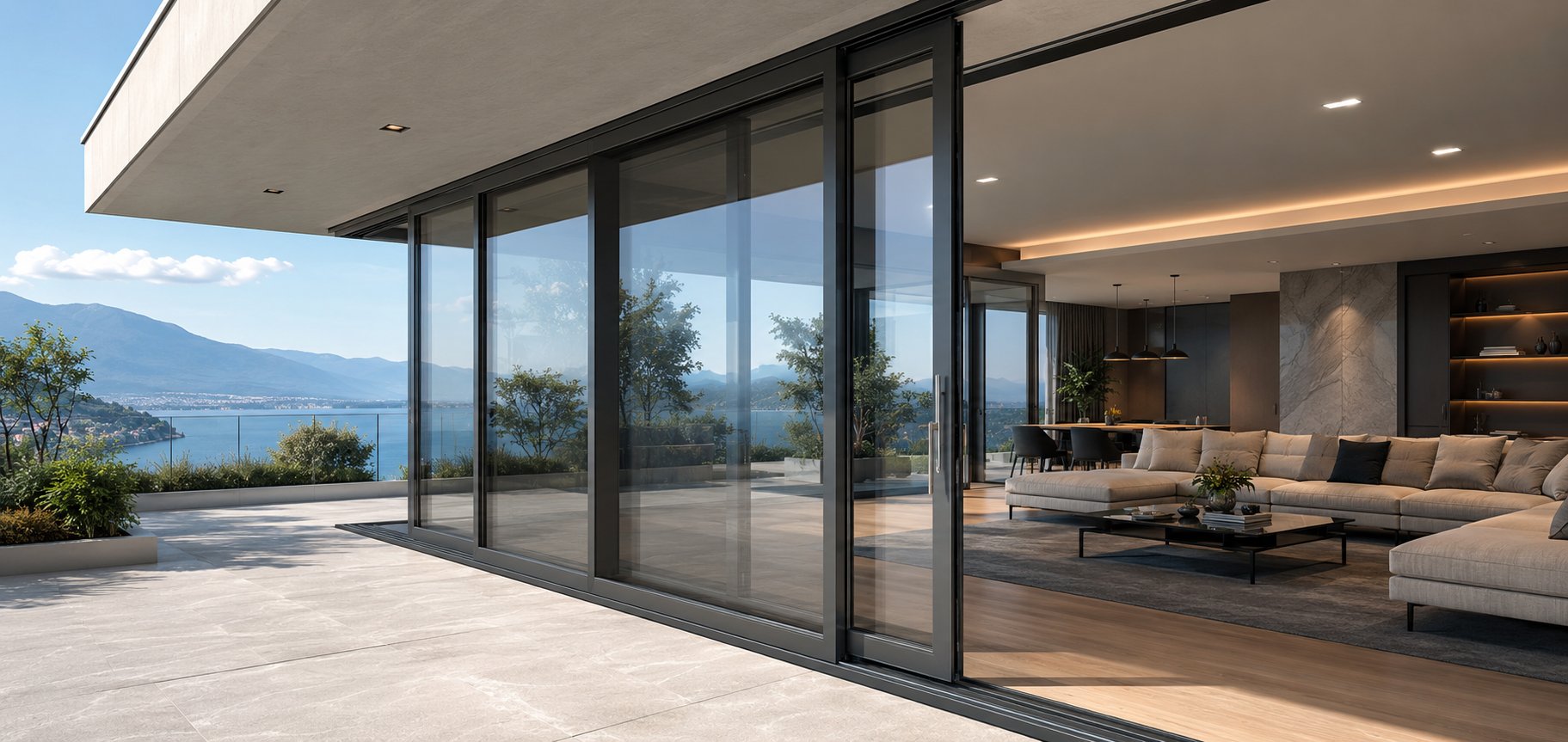
Design-wise, both systems can be visually appealing. However, lift and slide systems often allow for larger glass surfaces and slimmer visible profiles due to their structural integrity.
This means more daylight, wider panoramic views, and a stronger indoor-outdoor connection. In contemporary villas, coastal residences, and modern commercial spaces, that visual continuity is not just a detail — it defines the entire atmosphere.
Standard sliding systems still offer clean lines and minimal aesthetics, but they may not achieve the same dramatic scale.
When Should You Choose Lift & Slide?
- If you are planning large panoramic openings
- If thermal insulation is a top priority
- If premium user experience matters
- If structural durability for heavy panels is required
- If your project targets high-end residential or commercial markets
When Is a Standard Sliding System the Right Choice?
- If the opening size is moderate
- If budget optimization is important
- If the project is a renovation with limited structural adjustments
- If simplicity and straightforward installation are preferred
Common Misconceptions
“All sliding doors perform the same.”
They do not. The internal mechanism makes a measurable difference in insulation, durability, and user comfort.
“Lift and slide is always necessary.”
Not necessarily. For smaller openings, a well-designed standard sliding system can perform excellently.
“Standard sliding systems are outdated.”
Absolutely not. Modern aluminum sliding systems have evolved significantly and remain widely used across residential and commercial projects.
Final Thoughts: Which One Would I Recommend?
Honestly, it depends on your architectural vision and performance expectations. If your goal is to blur the line between indoors and outdoors with expansive glazing and top-tier insulation, lift and slide systems are hard to beat. They feel solid, refined, and technically impressive.
If you are working within a tighter budget or dealing with standard-sized openings, a high-quality standard sliding system can still deliver comfort, durability, and elegant design.
At the end of the day, the right system is the one that aligns with your project’s structural logic, climate conditions, and lifestyle expectations. Choose wisely, and your sliding system will quietly perform for decades.
FAQ – Lift & Slide vs Standard Sliding Systems
What is the main difference between lift and slide and standard sliding systems?
Lift and slide systems raise the sash before sliding, reducing friction and improving sealing performance. Standard sliding systems move directly along the track without lifting.
Are lift and slide doors more energy efficient?
Yes. Their compression sealing system typically provides better thermal insulation, air tightness, and water resistance.
Are standard sliding systems cheaper?
Generally, yes. They have simpler hardware and lower manufacturing costs.
Can standard sliding doors be used for large openings?
They can handle moderate openings, but very large spans are better suited for lift and slide systems.
Which system is better for luxury homes?
Lift and slide systems are often preferred for high-end residential projects due to their large panel capacity and premium operation feel.
Do lift and slide systems require more maintenance?
Not necessarily. With proper installation and routine maintenance, both systems can provide long-term performance.
If you are planning your next architectural project and still weighing the options, feel free to explore more insights on advanced aluminum systems — and share your thoughts or questions with us. Let’s design smarter spaces together.



Leave a Reply
You must be logged in to post a comment.