
What Is a Photocell Door System?
What Is a Photocell Door System?
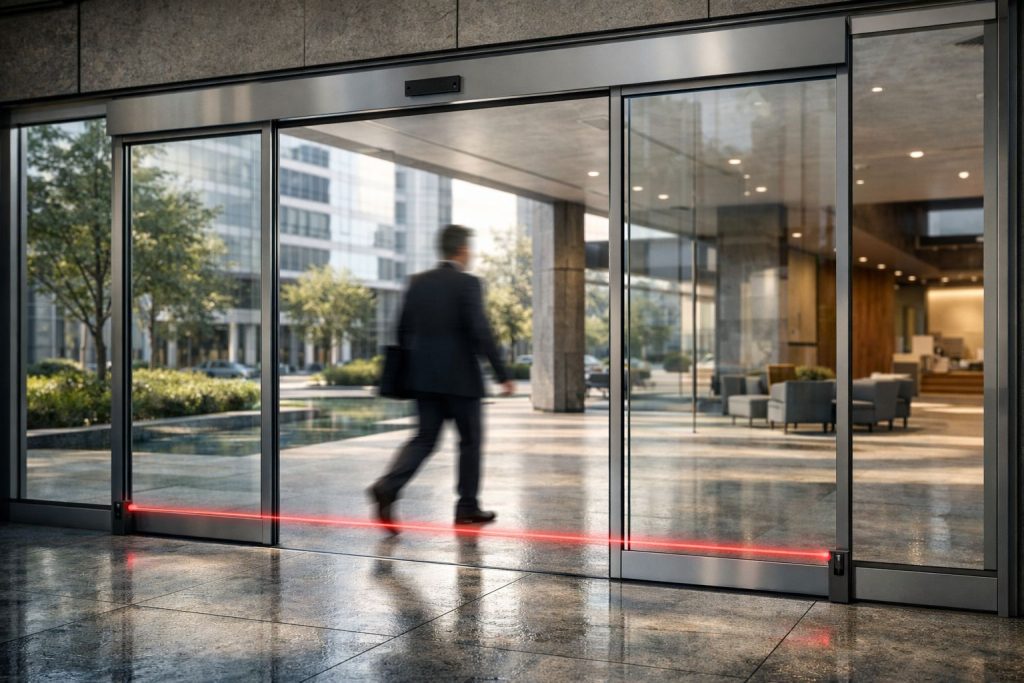
A photocell door system uses light-based sensors to detect motion or presence, allowing doors to open and close automatically, safely, and efficiently.
Walk into any modern hospital, hotel, shopping mall, or office building and the doors seem to “know” you’re there. They glide open without a touch. No pushing, no pulling. Behind that quiet choreography is something called a photocell door system.
If you’ve ever wondered how these systems actually work, whether they’re different from motion sensors, or how they fit into architectural design and building safety standards—you’re in the right place. Let’s unpack it properly.
Understanding the Basics: What Is a Photocell Door System?
A photocell door system is an automatic door mechanism that uses photoelectric sensors—commonly referred to as photocells—to detect movement, presence, or obstruction. Once the sensor identifies someone approaching (or something blocking the doorway), it sends a signal to the door operator to open or prevent closing.
In simple terms, it’s a light-based detection system. But technically speaking, it’s much more refined than that.
Most automatic sliding doors, swing doors, telescopic doors, and even industrial sectional doors today rely on photocell technology for safety compliance and user convenience.
How Does a Photocell Door System Work?
At its core, a photocell system works through a beam of light—usually infrared—transmitted between two points.
The Core Components
- Emitter: Sends out an infrared light beam.
- Receiver: Detects the beam from the emitter.
- Control unit: Processes the signal and communicates with the door motor.
- Door operator: Physically opens or stops the door.
When the beam between the emitter and receiver is uninterrupted, the system assumes the doorway is clear. If someone walks through and breaks that beam—even for a split second—the system reacts instantly.
Depending on configuration, the door may:
- Open automatically
- Remain open
- Stop closing
- Reverse direction to prevent impact
It sounds simple. But the calibration, detection angle, and response timing require precise engineering.
Photocell vs Motion Sensor: Are They the Same?
People often use these terms interchangeably. They’re related—but not identical.
| Feature | Photocell Sensor | Motion Sensor |
|---|---|---|
| Detection Method | Interrupts a light beam | Detects movement in a defined area |
| Primary Function | Safety & obstruction detection | Activation trigger |
| Common Placement | Near door threshold | Above or around door entry zone |
| Precision | Very precise linear detection | Broader area detection |
In many modern automatic door systems, both technologies work together. The motion sensor triggers the door to open. The photocell ensures nothing gets trapped during closing. A subtle but critical difference.
Where Are Photocell Door Systems Commonly Used?
From a design and operational perspective, photocell doors are everywhere. And for good reason.
Commercial Buildings
Retail stores, shopping malls, airports, and corporate offices use automatic sliding doors with photocells to manage high traffic flow efficiently.
Healthcare Facilities
Hospitals and clinics prioritize touchless entry to reduce contamination risks. Photocell systems help maintain hygiene standards—something we all became more aware of in recent years.
Industrial and Logistics Facilities
In warehouses and factories, photocell-equipped industrial doors prevent accidents involving forklifts, pallets, or personnel. Safety compliance here isn’t optional; it’s mandatory.
Residential and Luxury Projects
High-end villas and smart homes increasingly integrate photocell sliding doors as part of automated entrance systems. Not just for convenience, but for architectural elegance.
Why Photocell Systems Matter in Architectural Design
As architects and system designers, we’re not just choosing doors—we’re shaping user experience.
In my experience, the most successful entrance designs combine aesthetics with invisible technology. A photocell door system allows:
- Seamless user movement
- Barrier-free accessibility (ADA compliance)
- Energy efficiency through controlled opening times
- Improved safety standards
And honestly, when designed properly, the technology disappears. The user only feels the fluidity of space.
Safety Standards and Compliance
Photocell systems are not just a convenience feature—they are often a regulatory requirement.
International safety standards such as EN 16005 (Europe) and ANSI/BHMA standards (North America) require automatic doors to include safety sensors that prevent impact and entrapment.
Without photocell protection, a closing automatic door could pose serious injury risks. That’s why modern door automation systems always integrate redundant safety layers.
Types of Photocell Door Configurations
Single Beam Photocell
Basic configuration. Suitable for low-traffic areas. Detects interruption along a single horizontal line.
Dual Beam Photocell
Provides increased detection accuracy. Often used in commercial entrances.
Light Curtain Systems
Multiple infrared beams create a virtual “curtain” of protection. Ideal for high-risk environments such as hospitals and industrial facilities.
Light curtains are, in my opinion, the gold standard for safety-critical entrances.
Energy Efficiency and Sustainability
Automatic doors equipped with photocells contribute to building energy performance.
Because doors close precisely after detecting that the passage area is clear, conditioned air loss is minimized. In climate-controlled commercial buildings, that translates into:
- Reduced HVAC load
- Lower operational costs
- Improved sustainability metrics
It may seem like a small detail—but over time, it makes a measurable difference.
Common Technical Specifications to Consider
When specifying a photocell door system, professionals typically evaluate:
- Detection range (meters)
- Response time (milliseconds)
- Operating voltage
- IP rating (dust & water resistance)
- Temperature tolerance
- Compatibility with door operator brands
Skipping these details can lead to mismatched systems or premature failure. And no one wants a malfunctioning entrance in a flagship project.
Maintenance and Troubleshooting
Photocell systems are relatively low-maintenance, but they’re not entirely maintenance-free.
Typical issues include:
- Misalignment between emitter and receiver
- Dust accumulation blocking the lens
- Wiring faults
- Sunlight interference (rare but possible)
A simple periodic inspection—cleaning lenses and verifying alignment—usually prevents 90% of operational problems.
Advantages of Photocell Door Systems
- Enhanced user safety
- Touchless access
- Improved traffic flow
- Compliance with safety regulations
- Long-term operational efficiency
- Integration with smart building systems
From both an architectural and operational standpoint, it’s hard to argue against their value.
Are There Any Limitations?
To be fair—yes.
Extreme environmental conditions, poor installation, or low-quality components can reduce reliability. Also, cheaper single-beam systems may not detect smaller objects near floor level.
This is why system quality and professional installation matter more than many realize.
Future of Photocell Door Technology
We’re seeing rapid integration with AI-based presence detection, radar sensors, and IoT-enabled building automation systems.
Modern smart entrance solutions combine photocell safety with:
- Thermal detection
- Facial recognition access control
- Remote monitoring dashboards
- Energy analytics tracking
The entrance is no longer just a passage—it’s becoming an intelligent interface between people and buildings.
FAQ – Frequently Asked Questions
What is the main purpose of a photocell in an automatic door?
The primary purpose is safety. It detects obstructions and prevents the door from closing on people or objects.
Is a photocell door system the same as a motion sensor door?
No. Motion sensors trigger opening, while photocells provide obstruction detection and safety control.
Are photocell door systems required by law?
In most commercial and public buildings, safety sensors like photocells are required by international safety standards.
Can photocell systems be installed on existing doors?
Yes, in many cases they can be retrofitted to compatible automatic door operators.
Do photocell doors consume more electricity?
No. They typically reduce energy loss by ensuring doors close efficiently after passage.
How long do photocell sensors last?
High-quality sensors can last many years with minimal maintenance, provided they are properly installed and protected.
Final Thoughts
A photocell door system might seem like a small technical detail within a building. But in reality, it’s a quiet guardian of safety, comfort, and architectural intelligence.
If you’re designing or specifying an entrance solution, don’t treat photocell integration as an afterthought. Done right, it enhances both performance and user experience in ways that are almost invisible—yet deeply impactful.
If you found this guide helpful, feel free to share it with your team or leave a comment with your project questions. Let’s keep pushing smarter, safer entrance design forward.




Leave a Reply
You must be logged in to post a comment.