
What Is Laminated Glass? Where Is It Used?
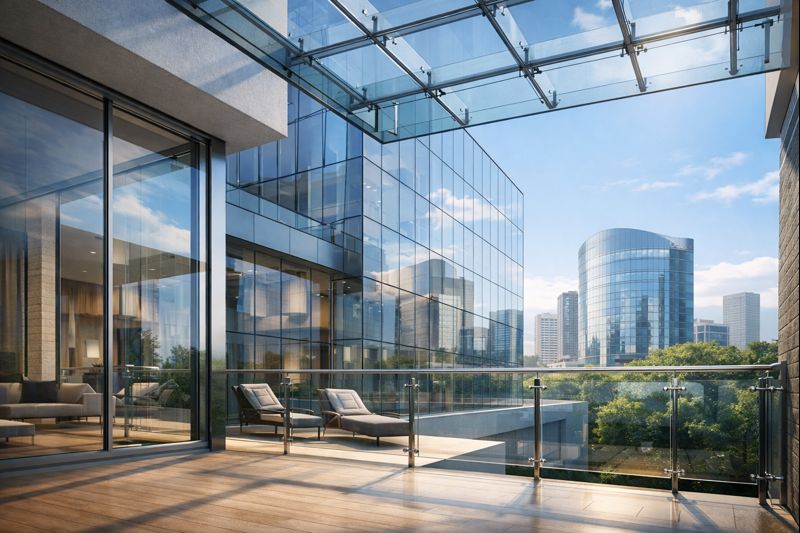
Laminated glass is a safety-focused glazing solution that combines strength, security, and comfort, widely used in modern architecture and interior design.
Let’s Start Simple: What Exactly Is Laminated Glass?
If I explain laminated glass the way I usually do to clients or friends outside the industry, I say this: it’s a type of glass that refuses to fall apart when broken. Sounds simple, right? But behind that simplicity lies a surprisingly smart piece of engineering.
Laminated glass is made by bonding two or more sheets of glass together with a flexible interlayer, usually PVB (polyvinyl butyral), EVA, or SGP. These layers are fused under heat and pressure, becoming a single, solid unit.
When laminated glass breaks, the fragments stick to the interlayer instead of scattering. In other words, the glass cracks, but it stays in place. From a safety and performance perspective, that changes everything.
How Laminated Glass Is Manufactured
Understanding how laminated glass is produced helps explain why it performs so well. The process isn’t complicated to describe, but it’s very precise in execution.
- Two or more glass panes are thoroughly cleaned
- An interlayer film is placed between the glass sheets
- The assembly is heated and pressed in an autoclave
- The layers bond permanently into a single panel
The result is a glass product that looks almost identical to standard glass but behaves completely differently under stress.
Why Laminated Glass Is Considered a Safety Glass
Honestly, this is where laminated glass truly earns its reputation. Traditional glass breaks dangerously. Tempered glass shatters into small pieces. Laminated glass, however, holds together.
Even after impact, the glass remains largely intact, continuing to act as a barrier. That’s why building codes around the world classify laminated glass as safety glazing.
In places where human impact, falling risk, or forced entry is a concern, laminated glass is not just a preference, it’s often a requirement.
Key Advantages of Laminated Glass
From my experience in architectural projects, laminated glass is rarely chosen for a single reason. It’s usually a combination of benefits working together.
Enhanced Safety
The interlayer prevents sharp glass shards from becoming airborne. This dramatically reduces injury risk in case of breakage.
Improved Security
Laminated glass is much harder to penetrate. Even if cracked, it resists repeated impacts, making forced entry far more difficult.
Sound Insulation
Here’s something many people don’t expect: laminated glass significantly reduces noise transmission. The interlayer absorbs sound vibrations, making interiors noticeably quieter.
UV Protection
The interlayer blocks up to 99% of harmful UV rays. That means less fading for furniture, flooring, and fabrics.
Structural Stability
When laminated glass breaks, it continues to act as a single piece. In overhead or façade applications, this is a huge safety advantage.
Laminated Glass vs Tempered Glass: Not a Competition, a Choice
This comparison comes up all the time. And honestly, it shouldn’t be framed as “which one is better,” but rather “which one is more suitable.”
| Feature | Laminated Glass | Tempered Glass |
|---|---|---|
| Breakage behavior | Cracks but stays together | Shatters into small pieces |
| Security performance | High | Moderate |
| Sound insulation | Excellent | Limited |
| Overhead use | Highly suitable | Less suitable alone |
In many premium projects, these two are even combined: laminated tempered glass. Best of both worlds, really.
Where Is Laminated Glass Used?
Once you start paying attention, you’ll notice laminated glass everywhere. And for good reason.
Building Facades and Curtain Walls
Modern architecture loves transparency, but safety can’t be compromised. Laminated glass allows large glass surfaces while maintaining structural integrity.
Glass Railings and Balustrades
Balconies, staircases, and terraces rely heavily on laminated glass. If a panel cracks, it stays in place, protecting people below.
Skylights and Roof Glazing
Overhead glass is a non-negotiable zone for laminated glass. No one wants broken glass falling from above, obviously.
Windows and Doors
In residential and commercial spaces, laminated glass improves security and acoustic comfort, especially in urban environments.
Interior Partitions
Offices and modern homes use laminated glass for partitions where both transparency and sound control matter.
Automotive Glass
Car windshields are a classic example. They crack on impact but remain intact, protecting passengers.
Special Applications
- Bullet-resistant glazing
- Hurricane-resistant windows
- Anti-vandal shopfronts
Acoustic Laminated Glass: A Quiet Advantage
This deserves its own section. In busy cities, noise is one of the biggest comfort issues. Laminated glass with acoustic interlayers significantly reduces traffic, aircraft, and street noise.
From what I’ve seen, clients often don’t realize how much difference it makes until they experience it. And then, there’s no going back.
Is Laminated Glass Energy Efficient?
On its own, laminated glass isn’t primarily an insulation product. But when combined with double or triple glazing systems, it contributes to thermal performance.
It works particularly well in insulated glass units where safety, sound control, and energy efficiency are all required together.
Things to Consider Before Choosing Laminated Glass
Like any building material, laminated glass should be selected thoughtfully.
- Thickness and number of layers
- Type of interlayer used
- Acoustic or security requirements
- Local building regulations
In my opinion, this is not an area to cut corners. Proper specification makes a real difference long-term.
Maintenance and Durability
Laminated glass doesn’t require special maintenance beyond regular cleaning. The interlayer is protected inside the glass, so durability is excellent.
As long as it’s correctly manufactured and installed, laminated glass performs reliably for decades.
Frequently Asked Questions (FAQ)
What is laminated glass?
Laminated glass is made of multiple glass layers bonded with a flexible interlayer that holds the glass together when broken.
Is laminated glass safer than normal glass?
Yes. It reduces injury risk by preventing glass shards from scattering.
Can laminated glass break?
Yes, but it cracks instead of shattering and remains largely intact.
Is laminated glass soundproof?
It significantly reduces noise, especially when acoustic interlayers are used.
Where is laminated glass commonly used?
Facades, railings, skylights, windows, doors, and automotive windshields.
Is laminated glass more expensive?
It costs more than standard glass but offers higher safety, comfort, and performance.
Final Thoughts
To be honest, laminated glass is one of those materials that quietly does a lot of work without drawing attention to itself. Safety, comfort, security, acoustics, all in one transparent solution.
If you’re planning a project where people’s safety and long-term performance matter, laminated glass is rarely the wrong choice.
If you found this guide useful, feel free to share it or leave a comment. Sometimes, the smallest design decisions make the biggest difference.


Leave a Reply
You must be logged in to post a comment.